
How will the trade war affect Europe?
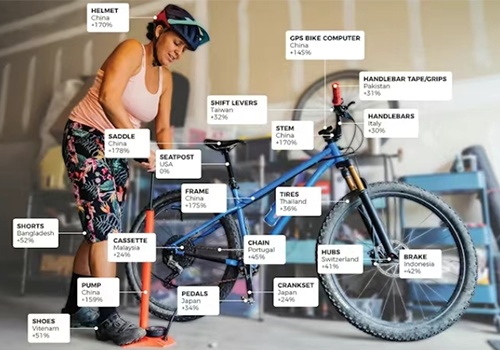
While most headlines focus on how the recent US tariffs will affect US consumers and Asian supply chains, the reality is that the impact will also be felt across Europe. The core issue is not just the tariffs themselves, but also their impact on finance and consumer confidence. As the world's largest consumer economy (accounting for more than 26% of global GDP), the United States has a unique and huge influence on global financial liquidity, supply chain structure, demand forecasts, etc. When the trans-Pacific financial community is turbulent, the global economy feels the consequences. First, uncertainty is worse than bad news, and it has quickly become the new normal. In the face of bad news, we can adapt, reprice, and find a way forward. But in the face of uncertainty, the entire economy will stagnate. Investments are frozen, decisions are delayed, and systems are paralyzed. Continued uncertainty will lead to a long-term market downturn, lower profit margins, and a weak economic recovery. In April this year, the United States suddenly announced high tariffs on goods from core bicycle supply regions such as mainland China, the European Union, Vietnam, and Taiwan, China, and then announced a suspension. This rapid tariff fluctuation is enough to cause turmoil in itself.
The bike industry relies on shared supply chains and production economics, which rely heavily on predictable global demand. Veteran observers note that the current strategy follows a familiar formula from Donald Trump's book, The Art of the Deal - exploiting uncertainty, playing to extremes, and issuing media-pleasing statements that brand the retreat from negotiations as a victory. The 145% threat may be just a bluff; the 90-day pause may signal a retreat. While the situation may eventually calm down, it is irresponsible to make plans without preparing for the impact. The EU does not need to panic, but it should prepare for a weaker outlook. Even without a full-blown crisis, European consumers are likely to become more cautious. Once doubt sets in, buying habits change. "Nice to have" becomes "nice to have" - especially when it comes to non-essentials like bikes. First-time buyers will hesitate at first, and even loyal cyclists may hit the brakes if uncertainty grows. Both sides of the market will be hit: supply tightens, while demand falls. So contingency plans must be made. If work resumes, those jobs may change again, with little time to adapt. This state of suspension is destructive in itself.
Will we see a new wave of liquidations?
As a result of economic uncertainty, goods may be redirected, and parts, frames, and gear from China may be redirected to other markets. In fact, some products are already being redirected. Europe accounts for 17.6% of global GDP (second only to the United States), and its size and purchasing power, combined with its mature bicycle market and logistics, make it an ideal destination for excess goods that need to be sold quickly. While we cannot currently predict the scale and volume of products that may be redirected from China, if they do appear, they will enter the already saturated mid-market and cautious high-end market. Because much of this inventory is financed, the pressure to convert it into cash often outweighs concerns about profits. When large amounts of overstocked inventory meet hesitant or unmotivated consumers, the strategy is predictable: discounting. As a result, we may soon experience another wave of gray market transactions and online stores selling excess parts at discounts, as we did in 2022 and 2023.

This may be good for consumers, potentially attracting new riders who would never have considered cycling (even in the current saturated market), but it will create planning and profitability challenges for European retailers and distributors. The perceived value of new bikes could fall further, undermining the launch of lucrative high-end models and threatening the recovery of the generally weak mid- and low-end markets.While heavily discounted bikes and components may bring benefits in the short term, it comes at a cost. When uncertainty dominates the market, brands refocus on core products, streamline SKU complexity, and shift development to mature platforms. Some brands respond to market volatility by pausing or canceling high-risk projects, resulting in less innovation. If consumer confidence declines in the coming years, model and appearance updates may be more of a safe bet, with fewer bold new designs and category breakthroughs. Short-term deals may be exciting, but the long-term impact and the loss of volume from a cooling US market may make the industry more restrained and conservative, offering fewer products but demanding more.
European brands will see ripple effects globally and locally
Assembly and manufacturing challenges arising from the US trade war are not limited to China. European brands that produce in the EU and export to the US are expected to see a drop in exports as a result of tariffs. Brands that rely on the US to absorb production may be left with excess inventory. If these bikes can't be shipped, they will stay at home – meaning EU-made bikes for export will pile up in European warehouses or enter the European domestic market, exacerbating price pressures as retailers and distributors try to recover. If tariffs are applied unevenly – for example, Mexico or Taiwan are exempted but the EU is not – EU bikes will become less competitive in the US. Also of concern is the position of European brands that assemble in China and ship to the US. These stocks are subject to higher tariffs unless they can be reworked to comply with sales regulations in the EU country of origin.
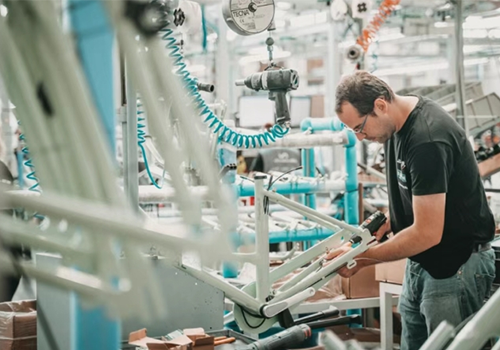
But there is a small upside: if U.S. tariffs on China remain high and the EU remains exempt, demand could shift to European-made bikes. EU brands with strong assembly facilities and local production credentials could become attractive to U.S. retailers seeking a stable alternative. But even this scenario carries risks, including rising costs, shorter delivery times, and the risk of policy reversals. Supply chains don't easily bounce back when policies shift-they slowly, often permanently, change course, and only change once the economy stabilizes. In short, European brands, retailers, and distributors must prepare for all three outcomes. In the best case, some businesses benefit from the redirection of U.S. demand. In the worst case, excess inventory floods the European market, depressing prices and prolonging the post-COVID-19 downturn. Opportunities and risks are two sides of the same coin, and the consequences will know no borders. Distributors and retailers should be wary of short-term margin compression from clearance sales and prepare for turbulent B2B bicycle manufacture by paying close attention to seasonal buying behavior and managing inventory levels accordingly.