
Looked up.
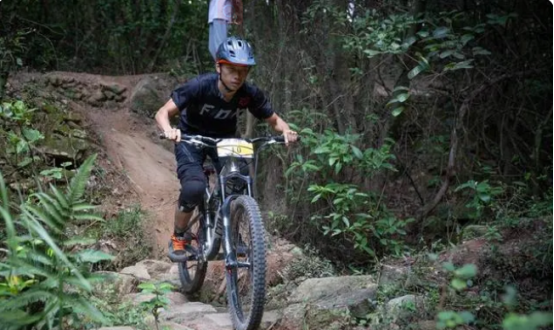
Head position affects balance, so keep your chin up and focus on the road ahead, try not to look down at the front wheels, as this will throw you off balance immediately, and looking down the trail will help you see the curve.
Bend up.
Bend your elbows and flare out so you can use your arms to control and tilt the bike.
It is enough to control the brakes with one or two fingers and keep your fingers on the brake lever all the way downhill so that you can respond to emergencies faster.
Climbing pose.
Having a good body posture and managing one's power output can make climbing easier, whether it's a long gentle climb or a short, sharp ascent. This requires balancing the weight between the front and rear wheels, keeping traction on the rear wheels, and weight on the front wheels to prevent warping.
Move your hips forward on the saddle, and if your hands feel light, move your body forward and lower your upper body to put more weight on the front wheel, which will allow for the steering of the handlebars.
Sit or stand. Sitting and pedaling are more effective in most cases, but you may want to stand up and take a break. On rough terrain, it is best to hover above your normal sitting position to absorb the bumps.