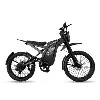

You must love your lovely mountain bike, but it won't always be trouble-free. This article brings you some tips and tricks for prevention and diagnosis, as well as advice on when maintenance is needed.
Clean and lubricate your drivetrain
A bike's drivetrain consists of a myriad of small parts for different purposes, but whether it's positive or negative discs, or shift cables, they all need to work together. While this may all seem complicated, there is one very simple thing you can do to make it work smoothly: keep it clean and lubricated.
Any grit and dirt stuck to your drivetrain will slowly cause wear and tear just like sandpaper, and will especially damage your chain. Depending on where and how you ride, the rate of wear can be surprisingly fast. But all it takes is a rag sprayed with cleaner, an old toothbrush and a few minutes of your time. Clean it a little after every two or three rides, and then re-lubricate your chain.
If you want to take the hassle out of it, consider using a chain washer. Chain washers are usually very inexpensive and can be used in conjunction with a cleaner to clean the grit from the chain crevices. Don't put too much oil in the chain when lubricating it, just a drop of oil in each link is perfect.
Set the correct tire pressure
The vacuum tires commonly found on mid- to high-end mountain bikes are a more reliable system than traditional open tires. However, since air can still leak out from many places, including directly through the sidewalls, it is always best practice to check tire pressure before each ride.
Tire air pressure has a huge impact on bike performance. Too little air pressure and the tire walls will flex and fold in turns, making handling feel vague and unpredictable, and off-road it can puncture your tires and even destroy your rims. If the air pressure is too high, the rubber of the tire will not be able to adapt to the road conditions and fit the ground, which will result in less grip and control.
The difference between too much and too little air pressure can be as little as a few PSI, and a tire gauge is essential for mountain bike riders.

Setting up your suspension
Today, mountain bike suspension structures are becoming more and more complex, and adjustments can be overwhelming. It doesn't matter how expensive or complex your fork and rear guts are if the shock isn't set up correctly. Whether you use a pneumatic shock or an oil-spring shock, heavier riders will need to set their shocks stiffer than lighter riders. If it's not set properly, too soft or too hard, your bike will not perform as it should, so whether your bike costs thousands or tens of thousands, don't forget to set your shocks properly.
Thankfully, most forks have an air pressure comparison chart sticker on the back of the fork leg, which can be a good reference. As for the rear guts, check the manufacturer's website or manual for recommended settings. If you choose a pneumatic shock, you will need to use a high-pressure cylinder when adjusting it.
Listen to your bike
Everyone's bike will squeak at some point, and you can identify and fix the problem before it gets worse. If the squeak goes away when you stand up to pedal, the problem is probably related to your seat post or saddle; if the sound persists, you may need to check the center axle as well as the bowl set. In addition, the disc screws, pedal threads and crank may also be the source of the noise. Check the screws first, then remove one part at a time where the noise seems to be coming from, making sure it is clean and properly greased.
Squeaks in the front of the bike tend to come from the handlebars, grips and bowl set. You can stand at the front of the bike, pinch the wheel with both legs and twist the handlebars hard to see if it makes a noise. If it does, first make sure the screws have been tightened to the correct torque. A thin layer of grease can be applied to the screw threads during installation to help ensure they are tightened smoothly.
Use the Internet to fix the problem
Whether the shifting feels stiff or the shifting is sluggish, your bike is telling you that it needs a maintenance tune-up. There are many instructional videos online today that show you how to fix a variety of things.
When you do need to learn to understand, first check the official website for the part to see their instructions and recommendations. Then move on to other advice.
Don't be afraid to go to the store
Bike stores can be intimidating for many "socially intimidated" riders. But they often have a wealth of knowledge and may be able to help solve your problem. Even if you didn't buy your bike from them, they'll be happy to give you any tools you need and may be able to provide you with some guidance, or you can unleash your "money power" and just pay a technician to fix it.