
On which side of the handlebar should the front brake lever be mounted?
Another question is whether the front brake should be controlled with the right hand or the left hand, which is a controversial topic as to which side of the handlebar the front brake lever should be mounted on. Some riders argue that it is better to use the strongest right hand, for right-handers, to control the rear brake. Motorists have always controlled bike the front brake with their right hand, so people who are both motorists and cyclists usually use the same arrangement to avoid confusion. Some countries driving on the right generally install the front brake handle on the left side of the handlebar, while countries driving on the left generally install the front brake handle on the left side of the handlebar, on the grounds that one hand is required to gesture while the other It can control the bike, and the hand left on the handle is usually used to control the rear brake, because when using the brake with one hand, the way of using the rear brake is more stable, and the braking distance is less important. march. In the United States, legislation stipulates that all bicycles must have the front brake handle on the left side of the handlebar when they leave the factory. After getting into the habit, you can react instinctively in an emergency and grab the right handle to avoid accidents.
In fact, it is not the decisive factor that the brake handle is installed on the side of the handlebar, the important thing is that you know how to use the front and rear brakes and control it dexterously. Both hands can be trained to become dexterous, once you get used to it, don't change it at will, otherwise, it would be bad to think about which handle controls which wheel in an emergency. When arranging the left and right brakes, there is a secondary factor that needs to be paid attention to, that is, whether the cable buckle reserved on the frame and the brake cable is smoothly routed. Although it can be installed on both sides, if the cable is not smooth, it will affect the operation of the brake and the reliability of the brake cable. The more common problem is the wear of the brake cable on the frame.
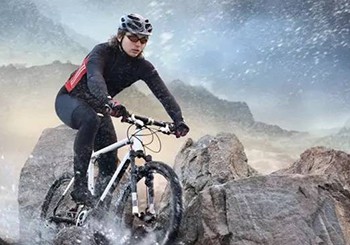
Cornering center of gravity and brake control
Let's talk about how to lean your body when you turn. As we all know, according to the law of circular motion, the bicycle must be inclined inward when turning, and the bicycle must be inclined inward when turning. The faster the speed, the greater the angle of inclination required. It is a physical phenomenon that cannot be changed by anyone. Isn't it worth talking about?
What we can do is that the inclination angle of the body is greater than the inclination angle of the bicycle, equal to the inclination angle of the bicycle, or less than the inclination angle of the bicycle,
This is another controversial topic. You may have played with motor vehicles. When the road racing bike is cornering, the inclination angle of the rider's body is always greater than the inclination angle of the motor vehicle, in order to make the bike corner at a more perpendicular angle to the ground to increase the grip of the tires. Look at the poses of those racers, no exceptions. So what should you do with a bike? Don't - let's look at the off-road motor vehicle. On the contrary, the inclination angle of the knight's body is almost always smaller than the inclination angle of the motor vehicle, especially when cornering at high speed, the rear wheels slide sideways. This posture can maintain the body in the bike all the time. Above, in order to grasp the center of gravity to be able to flexibly control the bike. If you do the opposite, you're guaranteed to hate your bike. Seeing this, I can't help but feel confused. What should I do? The author's proposition is to maintain the center of gravity of the body and the center of gravity of the bicycle on the extension plane of the frame. If it is a road bike, because the speed of the bicycle is not as fast as that of the racing bike, it seems that there is no need to make a fuss. At normal speed and cornering angle, the inclination angle of the body is slightly greater than or equal to the inclination angle of the bicycle, but pay attention to the inner side when turning. Pedal, do not hit the ground. If it is an off-road mountain bike, this is also the riding position that can control the bike most stably. If you don’t believe it, put your body weight on one foot, and deliberately make the lean angle of your body different from that of a bicycle, and ride on rough roads. Look, feel the sporty shape of the bike, is it full of wildness? The center of gravity of the bicycle is on the extension plane of the frame, and you can even ride it safely, but when passing through the hairpin bend at high speed, whether it is a road bike or a mountain bike, you can imitate the riding skills of an off-road motorcycle and let your body lean The angle is smaller than the lean angle of the bicycle, so that it can react quickly and maintain balance when the rear wheel slips. Remember not to use the front brake at this time.
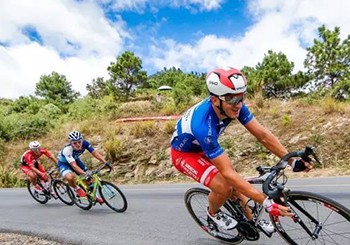
final recommendation
Let's go back to the topic, maybe many people will say: it is very dangerous to use the front brake when cornering. This is true if your riding position and cornering technique are incorrect. As mentioned earlier, when turning, the center of gravity must move inward to maintain balance. You already know that there are three cornering postures, and usually only one is correct, that is to maintain the center of gravity of the body on the extension plane of the frame, which is the most stable position. When the leaning angle of the body is different from the leaning angle of the bicycle, the body will produce lateral stress on the bicycle. When you use the front brake at this moment, the centrifugal force will throw you in the tangential direction, and the crash is the final result. If you want to experience this force, you can walk straight on the rough road, put your body weight on one foot, let the body lean, and try to pull the front brake handle lightly. It's not scary. Purely in terms of braking effect, relying on the front brake should be no problem, but the fork is under a lot of stress, and if you're using a long-travel fork that's very springy, you can watch it bend backward when using the front brake only The extent of it is really unbearable. This kind of lateral stress is a big test for the fork, in this case, the internal damping is greatly increased, and some lower-level suspension forks do not even extend. If you use the rear brake to share the braking force, the bending of the front fork will be greatly reduced.
Therefore, according to my personal opinion, the ideal braking habit is to make full use of the front and rear brakes. On general roads, when there is no worry of the front wheel slipping, the front brake is the main brake, and the rear brake is the auxiliary; on road conditions that may cause the front wheel to slip Down, the rear brake is the main, and the front brake is the auxiliary. If you are worried that this will cause confusion, you can consider the following method: that is, road bikes or riders who often only ride on oil-parked roads, use the front brake as the main method and the rear brake as a supplement, and prefer pure off-road or even For riders who love alpine downhill activities, it is more appropriate to use the rear brake as the main and the front brake as a supplement.