
Using the front and rear brakes at the same time is prone to the "flick" phenomenon
If the front brake is still active when the rear wheel is slipping, it will cause the rear wheel to throw the front wheel, because the deceleration force of the front wheel is greater than the deceleration force of the rear wheel. Once the rear wheel slips, it tends to slide sideways rather than forward. At this time, the force of the rear brake must be reduced immediately, or the rear brake must be fully released to restore balance. On dry asphalt roads or concrete roads, the front brakes are used more often than the rear brakes. It can also be said that the front brakes are the main brakes and the rear brakes are supplemented, or even the rear brakes may not be used at all. Some people abroad strongly advocate this idea. In theory, the maximum braking effect occurs when the front brake is applied to the extent that the rear wheel just floats off the ground. At this time, as long as a little force is applied to the rear brake, it may cause the rear wheel to slip. To get a feel for this theory, find a big square and use the front and rear brakes at the same time, but put most of your power on the front brakes, keep pedaling with both feet, and your feet will feel the rear wheel lift. Accelerate slowly at first to feel it, then gradually increase the speed to practice emergency braking until you notice this phenomenon. In this way, you can learn to pinch to the critical point where the rear wheel is just floating.
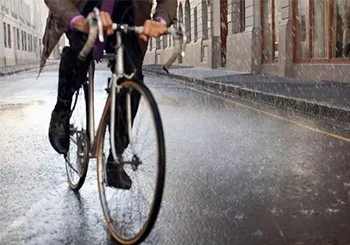
Since only the front brake can be used, what do you need to do with the rear brake?
still useful, but must be used in the following cases, namely
1. Slippery road: On dry roads, tires rarely slip, but on wet roads, the situation is different. In this situation, if the rear wheel slips, it is easy to restore the balance. If the front wheel slips, it cannot be saved, so the rear brake must be used to stop the bike.
2. Soft pavement: The situation is similar to that of slippery pavement, and the possibility of tire slippage is greatly increased. It is also necessary to use the rear brake to stop the bike. However, at this time, the front brake can be used as appropriate, and the front wheel does not slip to the limit.
3. Bumpy road: When walking on a bumpy road, the wheels are likely to jump off the ground. In this case, the front brake cannot be used. If you use the front brake with the front wheel jumping off the ground, the front wheel will lock up, and landing with a locked front wheel will be a bad thing.
4. When the front tire is punctured: If the front tire is suddenly punctured while riding, the front brake cannot be used. If the front brake is used in this case, the tire may be separated from the steel ring, which will cause the bike to overturn, so be careful.
5. Front brake failure: When the front brake wire is broken or the brake pad is excessively worn and any other problems cause the front brake to be unusable, of course, only the rear brake can be used.