
For many cycling enthusiasts, switching from flat pedals to clipless pedals is often an important step in improving their cycling skills. Here is everything you need to know about it, including the benefits and usage advice of clipless pedals.
The term clipless pedals is also easy to understand, locking the shoes and pedals together. The clipless system is a system that allows the pedals and shoes to be fixed together. It can be used in various cycling fields, such as road, mountain and gravel, but the cycling shoes and clipless pedals are designed according to the specific requirements of each riding style.
When did people start using clipless pedals?
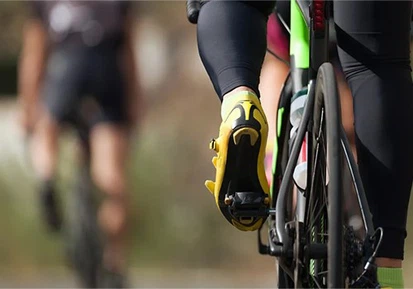
In 1984, Look applied ski-binding technology to bicycles, and clipless pedals began to appear in cycling.
In 1985, Bernard Hinault won the Tour de France riding a Look-designed product, and from then on, there was no stopping it.
Now, using clipless pedals is almost the norm in road cycling, and many mountain bikers also use them. The clipless system can be said to be one of the greatest cycling innovations of all time.
Are clipless pedals better for cycling?
Some say that riding with cleats can improve pedaling efficiency because it encourages you to pedal and pull throughout the entire pedal stroke, not just on the downstroke. Others say that some studies have shown that no one can actually pedal more efficiently with cleats, and that the increased efficiency of riding with cleats may just be an illusion.
That being said, using cleats can effectively prevent slipping with your pedals, which is important if you pedal at a higher cadence, sprint, ride on wet surfaces, or ride off-road. Riding with cleats is also more comfortable, especially on long rides, because your feet are fixed in the right position without having to constantly adjust their position.
What type of cleats do I need?
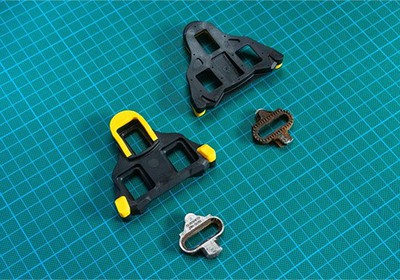
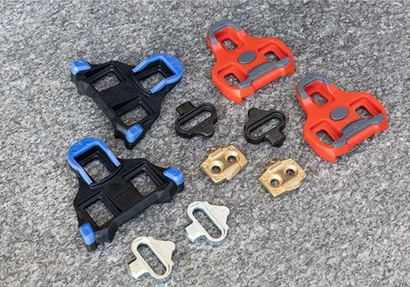
Broadly speaking, there are two-hole cleats or three-hole cleats, and which you choose probably depends on the type of riding you do.
Double hole lock plate
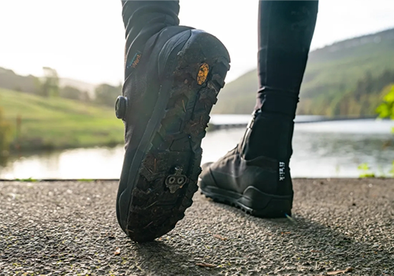
As the name implies, two-hole cleats have two points of attachment to the sole of the shoe. They are made of metal and are primarily used on two-sided mountain bike pedals. Two-hole cleats are usually smaller, and cycling shoes designed for them can have an outsole with a tread pattern on the edge. The cleat can be recessed into the sole of the shoe. This makes two-hole cleats easier to walk in than three-hole shoes, so they are often used in mountain bike shoes, gravel bike shoes, and commuter shoes, all of which may be used for normal walking outside of cycling.
Two-hole cleats are often used with two-sided pedals. Compared with other cleat designs, this type of pedal is easier to click in and out, and you don't have to worry about whether the pedal is facing up correctly.
Three-hole lock plate
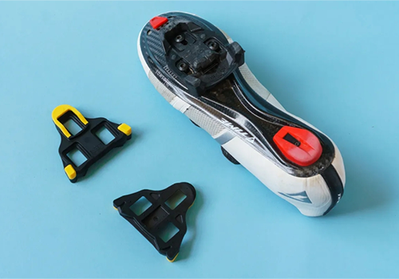
The soles of road cycling shoes are usually designed with three screw holes to accommodate three-hole cleats. These cleats are much larger than two-hole cleats and are usually made of composite materials. The larger cleats provide a larger contact area between the shoe and the pedal, increasing stability and power transmission efficiency.
Most shoes designed for three-hole cleats have smooth soles, which makes walking in them more difficult. The cleats paired with three-hole cleats are single-sided, which may not be easy for novices to lock, but they will be easy to operate after a period of familiarity.
Of course, road bikes can also use mountain bike double-sided cleats, which can be adjusted according to road conditions and personal preferences.
How to install cleats on cycling shoes
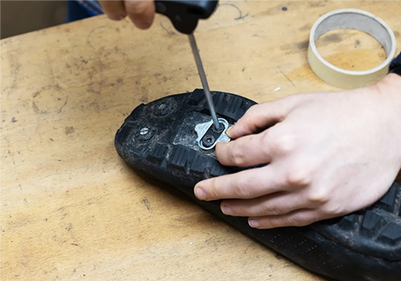
The first step is installation, and you need to pay attention to the front-to-back positioning of the cleats, the left-to-right placement, or the inside-out angle of the toes. The simplest method is to place the cleats directly under the sole of the foot, in line with the shoe. Then, after a few rides, if you feel uncomfortable or unaccustomed, use the hexagon socket to adjust the position of the cleats. A good bicycle shop can help you fix the cleats correctly on the shoes, and then you may need to adjust the seat height to match the pedals.
How to use clipless pedals
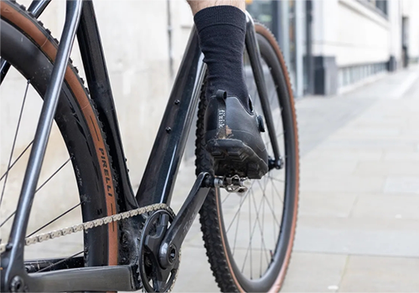
Although the design of clipless pedals varies, the principle is almost the same. Slide the front of the cleat under the buckle on the clip and press hard with your heel. You should hear a clear sound and feel the engagement when you step in. To loosen it, just twist your heel to the side. It takes some practice, but it is easy to do.
The best way to practice is to lean against the wall and step the clip in and out repeatedly until you get the hang of it. Then choose a quiet road with few people to actually ride, ride in the city, at intersections, and narrow streets. It is best to loosen before reaching intersections and traffic lights to ensure safety. Of course, falling off at zero speed is a necessary process. Don't be afraid. Everyone will experience it.
9 tips for using cycling shoes
1. Try double-sided clinch pedals first
If you are nervous about using clinch pedals at first and often use them for commuting, it is recommended that you clip the flat pedal modification plate on one side of the clinch pedal so that you can ride in ordinary shoes sometimes and it is also convenient to use the clinch pedal on the other side.
2. Lower the spring tension
When you first use clinch pedals, loosen the spring tension of the clinch pedal as much as possible, so that it is easier to lock in and take out. It is not too late to tighten it later when you are familiar with locking and unlocking.
3. Grab the fence to practice unlocking
Don't try to unlock both feet at the same time. If you are not familiar with locking and unlocking, try to quickly and cleanly rotate your heel outward to unlock by grabbing the fence, holding the wall or in the corridor.
4. Learn to predict
The good habit of predicting when to unlock and making advance preparations can effectively prevent zero-speed falls.
5. Travel or mountain bike shoes are great for stop-and-go commuting
Travel or mountain bike shoes with raised soles are a great choice for commuting, as they allow you to walk without worrying about pedaling loss and unstable control while riding. This is especially convenient if your commute requires constant snapping in and out at traffic lights. These shoes are also easier to walk in than road shoes, making them great for going to work.
6. Don't walk too far in road shoes
Mountain or gravel shoes have a groove in the middle of the sole to hold the cleat, which does not directly contact the ground, preventing wear and slipping, but road shoes do not have such a design, so try to avoid walking with road shoes.
7. Pay attention to cleat wear
Pay attention to cleat wear, especially if you are using a plastic three-hole road cleat. After the cleat is worn, it will feel loose when pedaling, which will not only greatly reduce the riding effect but also be dangerous. Most cleats have wear marks, of course, you can also buy additional protective covers to facilitate walking.
8. Keep it clean
Lack of maintenance may cause you to be unable to lock in or unlock the pedals smoothly, causing danger, so clean the cleats in time.
9. Check the soles
If you have difficulty stepping in, check whether there is any design or mud and sand on the soles that affect stepping in.
When do I need to replace my cleats?
Cleats are consumables and will inevitably need to be replaced due to wear. Many factors can cause cleats to wear, such as normal riding, walking in cleats, and harsh riding conditions. It is actually easy to tell when they need to be replaced. When they are difficult to step in or unlock, or very easy to step in or unlock, then they need to be replaced.