

There are so many knobs, dials, and valves on the suspension that it's difficult to know where to start setting your suspension. But besides the settings, drivers also make other common mistakes.
If you are a beginner in mountain biking or just need to review, these basic suggestions will help you avoid these common mistakes and make the most of your bike.
1. Incorrect preload setting
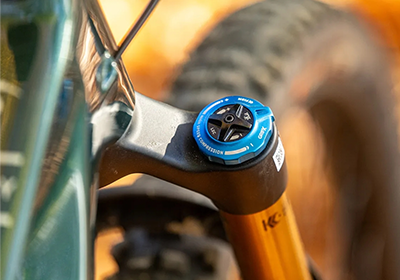
Setting your preloading state is the first and most important step in the setup process.
Body preloading is the amount of suspension stroke used by a bicycle when compressed under the weight of both the bicycle and the rider.
When you ride your bike down steep slopes or over potholes, the wheels will be suspended, and preloading can cause the wheels to move downward and separate from the body. This can generate grip and provide space for compression damping, slowing down the movement speed of the suspension system. If this sounds important, it's because it is indeed important!
The reason why the suspension system is effective is that its purpose is to keep the wheels in contact with the ground for as long as possible, thereby maintaining optimal and stable grip between the tires and the ground. If the spring is too hard, the contact between the wheel and the ground will be affected.
But what if the preload is too large?
Excessive preloading means that the spring is too soft. Overuse of the suspension stroke of a bicycle means that at best, the suspension system may appear slow and insensitive. At worst, the inability to achieve the optimal riding posture or maintain it may result in dangerous handling. During cycling, the pedals may touch the ground and damage the suspension components.
So, how much preload is appropriate?
Shock absorber and frame manufacturers usually tell you the optimal preloading amount for their products.
Generally speaking, the preload of the front fork is usually set at around 25%, while the rear suspension is set at around 30%. Different shock absorption ranges, riding styles, riding types, and personal preferences can all affect the setting of these preloads.
If you initially use the recommended standard values, after adapting to the riding experience brought by these settings, you can adjust the softness and hardness of the suspension based on this.
Pneumatic shock absorbers usually use air cylinders and American style air nozzles to change the shock absorption pressure. You can use a barometer to monitor the air pressure inside the air spring. If the preload of the spring suspension needs to be significantly changed, it is necessary to replace it with a harder or softer spring. Adjusting the preload of the coil spring can usually only be done with small adjustments.
2. Unbalanced front and rear suspension

If you are riding a fully cushioned bicycle, the front and rear suspension systems need to be tuned together.
If one end of the bicycle is harder and reacts faster than the other, or conversely, softer and reacts slower, it can lead to strange handling.
The geometric structure of a bicycle is influenced by the position of the shock absorber during travel, whether it is static geometry or dynamic geometry during riding. If the front and rear shock absorbers are not tuned to work together, the dynamic geometry of the bicycle will be far from the static assembly in terms of appearance and riding quality.
The best way to solve this problem is to follow the settings recommended by the mountain bike manufacturer.
A better solution is to have professionals debug your suspension, who can take you to the track to observe the performance of the bike under your control.
3. Error in rebound speed

The rebound speed can be adjusted according to your needs, pursuing agile reactions on the track or choosing a more comfortable riding experience.
However, there is a reasonable range here, and not all imaginable rebound speeds can provide the best or safest handling experience.
Generally speaking, the rebound damping rate determines the speed at which the suspension system returns to the preloaded position.
The rebound damping rate should be matched with the spring stiffness of the shock absorber: harder springs have greater force when extended compared to softer springs, therefore requiring stronger hydraulic rebound damping to provide resistance. If the rebound speed is set too fast, your suspension system will feel as if it is about to bounce you back into the air after compression. If the rebound speed is too slow, the suspension system will gradually be compressed. This means that the suspension may not be able to recover to the preloaded position before encountering the next bump. On a sufficiently rugged track, with each bump, the suspension will become lower and lower.
Improper rebound damping setting can, at best, reduce the comfort and speed of cycling, and at worst, make cycling dangerous and unpredictable.
Setting an appropriate rebound damping rate means that the suspension system should quickly but not abruptly return to the preloaded position.
4. Too many or too few gaskets in the air chamber
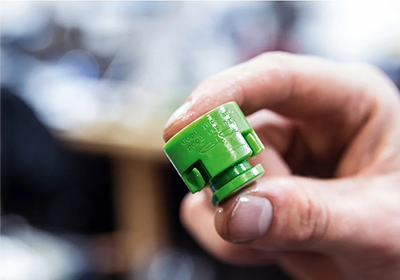
Nowadays, air suspension manufacturers usually provide chamber gaskets, which can fill the space inside the air spring chamber.
Increasing the number of air chamber gaskets means that the volume of air inside the air spring decreases. Reducing the volume inside the air spring means that the pressure inside the spring will rise faster during the shock absorption stroke.
This means that even if the air pressure is set the same when the shock absorber is in a stationary state, the resistance at the end of the stroke will be greater with the setting of the air chamber gasket.
Excessive gasket in the air chamber can cause the shock absorber to fail to reach its full stroke, resulting in a stiff and high resistance sensation when the stroke is deep. If the number of shims is insufficient, it means that even with the correct preloading setting, the shock absorber can easily hit the bottom.
The appropriate number of air chamber gaskets varies from person to person, depending on your riding intensity, riding type, and personal preferences.
Attention: You may want to improve the shock absorption's ability to resist bottoming out by increasing more compression damping, but the key difference between the two is that compression damping affects the entire stroke, while reducing the volume of the air spring mainly affects the end of the stroke.
5. Insufficient maintenance
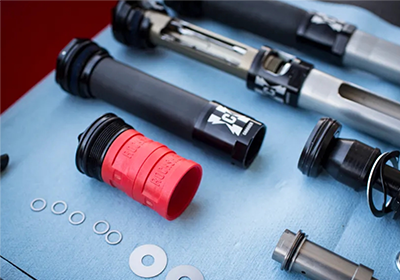
The maintenance of the front fork and suspension is crucial.
The shock absorber system contains many moving parts, which require regular maintenance. Failure to maintain these parts can exacerbate wear and tear. If possible, be sure to follow the maintenance plan recommended by the manufacturer for your front fork and suspension to ensure they work properly.
Failure to maintain the front fork and suspension on time can cause the suspension to become stuck, unable to perform at its best, and even cause wear on the coating and internal components.
Timely maintenance of the front fork and shock absorber, replacement of new oil, water, and seals can minimize the friction of the shock absorber system. Maintenance can prevent dirt from wearing down parts like grinding paste, and any problems can be detected before further deterioration.