

The direction of our current bicycle evolution has become more and more technological, and can even be said to be the prototype product of the future bicycle. For example, a seatpost can now be controlled wirelessly using Bluetooth for lift. Many of the non-electronic components also have a refined design and fancy look. For example, the soles of our locking shoes were once made of rubber, but now most locking soles are made of carbon fiber or fiberglass, which makes the soles much stiffer and allows for excellent force transfer and much more efficient transmission. But there is one, despite many engineers have tried to change, but still can not shake its position parts: the bike nipple. Brass still plays a very important role in the bicycle manufacturing process of bike nipples.
Of course, some brands of wheelsets have unique, custom-made versions of their nipples, which can better fit their wheelsets. Most nipples are shipped with screw adhesive applied to the spoke threads, which prevents the spokes from loosening due to vibration during the bike's life, and the actual material that makes up these caps is aluminum or brass. For more than 50 years, brass has been the main material used to make nipples. In fact, brass is a very common material around us, such as door handles, trombones and nautical sextants, most of which are made of brass.
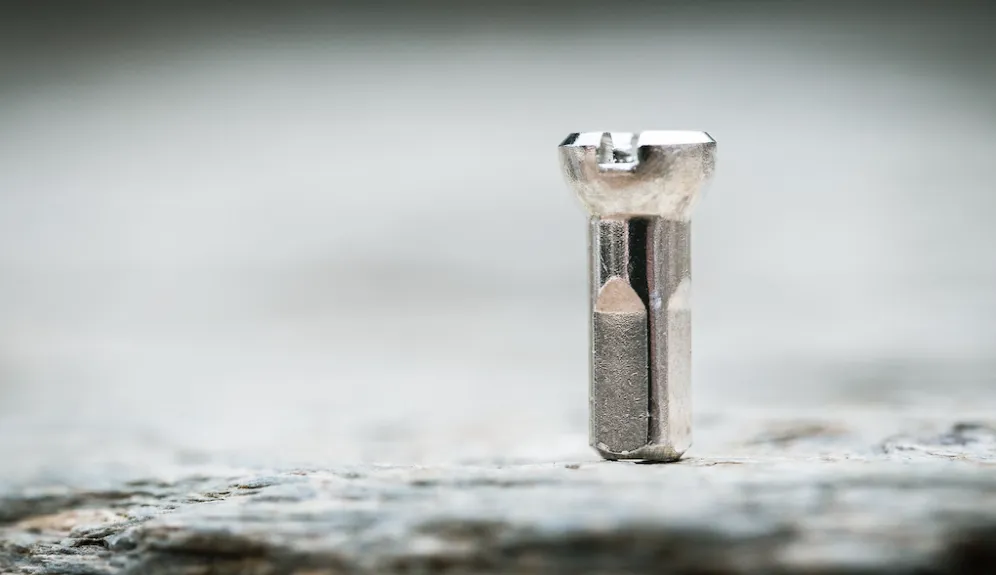
So why can't the spoke nipple be made of stainless steel like the spokes? What is the magic of brass that makes it possible to use it for nipples?
Through the study, we learned some key knowledge: brass is actually an alloy of copper, mainly composed of copper and nickel, it has high strength, and good plasticity, but also can well withstand the cold and hot use of the environment. However, the spokes cap is not made of 100% pure brass, there will be a layer of white or black oxide on its surface, of course, after grinding off the surface of the coating will reveal the original color of brass.
Many wheelsets have switched to low-lead nipples, especially those used on children's bicycles, to avoid hazards such as cancer, birth defects or reproductive defects caused by these spoke cap materials.
Brass is naturally a softer material than stainless steel, so it allows for more stretching when loads are applied to it. "When a spoke is working, it's always in varying degrees of tautness." Whether you're riding a bike or building a wheel, the nuts and bolts are held together because there's some very slight deformation of the threads when tightened. The material pushing back against this deformation is what tends to keep the bolts tight, and why split lock washers are sometimes needed to help. Especially when the spokes are at unpredictable stress levels, the extra deflection provided by brass keeps the friction slightly more stable.
"In addition, brass is a natural lubricant." If the spokes and nipples are both stainless steel, there is a high probability that wear will be a problem. Wear means that a certain amount of one material is scraped off and then adheres to the other, which then leaves a tiny crater in the original material and a tiny bump in the other. This is similar to the effect of friction welding, in which extreme forces combine with a sliding or rotational motion between two surfaces to cause them to be bonded.
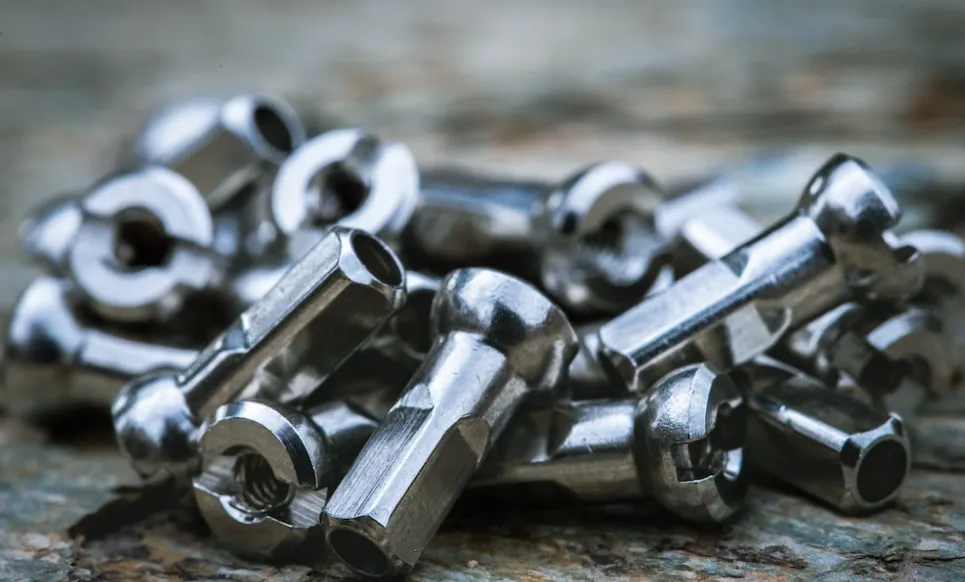
When it comes to bonding, brass and steel are different materials, which should be taboo if you want to avoid corrosion. But not all materials have the same qualities, and putting two different metals together increases the likelihood of "galvanic corrosion", which is what we mean when we talk about corrosion when different metals are put together, depending on the "anodic index" of each material. The more similar the anodic index of two metals, the safer it is to put them together. And cleverly, the difference in anodic index between brass and steel is much smaller. Materials like aluminum, on the other hand, have a larger anodic index difference than steel, so they are not suitable for use as nipples for stainless steel spokes. Of course, some riders will be curious, if some manufacturers will use aluminum spokes with aluminum nipples? Of course, this is no problem, such as Fulcrum's R0 wheelset is the use of aluminum spokes with aluminum spokes cap to get better corrosion resistance and more lightweight characteristics.
After talking about stainless steel and aluminum, of course, we must also mention the titanium alloy. In fact, the anodic index difference between titanium alloy and stainless steel spokes is not much, also quite suitable as a spoke cap installed on the bike. Unlike the aluminum alloy spoke cap that can significantly reduce the weight of the brass spoke cap, the titanium alloy spoke cap is basically negligible compared to the brass. Another important reason is that the cost of titanium is much higher than brass, especially when added to a fine component such as a spoke cap, which can make the cost of a bicycle wheelset even higher. Of course, the benefits of titanium spokes caps are also quite a lot, such as corrosion resistance is better, and the luster is beautiful, very pleasing. These titanium nipples can be easily found on platforms such as Alibaba.
The technological designs we see on our bikes are really refreshing, however, the laws of physics apply to everything, even the "future" bikes we ride today. So, unless and until some more suitable material is discovered in the future, or until someone actually makes a less expensive all carbon bicycle wheelset that includes rims, hubs, spokes and nipples all made of carbon fiber. Only then will brass nipples be defeated.