

The transmission and shifting system mainly consists of pedals, crank, large gear plate, center shaft (also known as BB: bottom bracket), chain, freewheel and shifting handle, shifting inner line, shifting outer tube, front and rear derailleurs. Usually, the left hand controls the front derailleur and the right hand controls the rear derailleur.
When shifting, the shifter handle manipulates the tension of the shifting cable to adjust the amount of spring tension to move the chain to the desired gears. The function of the transmission system is to transmit the power of the crank driven by the foot pedal through the chain to the teeth of the big gears and freewheel, which in turn drives the wheel frame and tires to rotate forward through the hub and wire spokes. The purpose of shifting is to allow riders to adjust the most suitable gear ratio (i.e. gear ratio) according to different road conditions and their physical strength to make the ride more comfortable.
Currently, there are 1~3 pieces of large gear discs and 6~10 pieces of freewheels (11 pieces for more advanced ones). Each piece of the cogwheel and freewheel has a projection called "tooth", which is "tooth" in English, so it is mostly represented by "T". As for the number of gears, it depends on the number of front and rear cogs and freewheels. For example, if the front cog has 3 cogs and the back freewheel has 10 cogs, there are 30 different gears of 3 by 10.
Generally speaking, the number of teeth spacing of road bikes can be divided into three types: standard disc (53/39), compression disc (50/34) and triple disc (53/39/30). As an example, the tooth pitch of one of the 10-segment freewheels is 11 / 12 / 13 / 14 / 15 / 17 / 19 / 21 / 24 / 28 T, respectively.
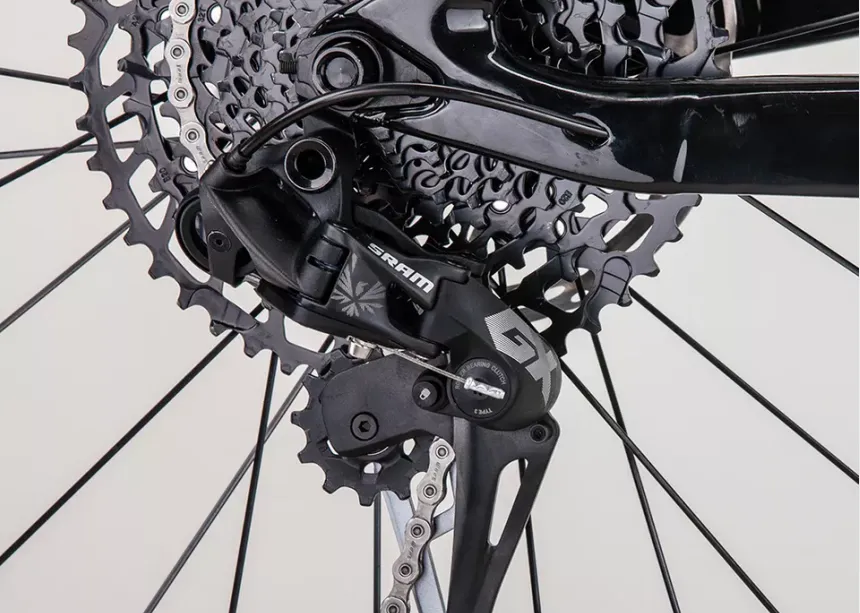
When the gear ratio is adjusted to be larger, the speed is faster although it is more effortful. For example, when the large gear plate 53 teeth with freewheel 11 teeth, the gear ratio (53 / 11) is about 4.82, which means that when the rider pedal 1 turn, it will drive the wheel through the freewheel behind the distance of 4.82 turns, in principle, for flat ground. When the gear ratio is adjusted to a smaller one, it saves more effort, but the forward distance is shorter. For example, when the large gear plate 39 teeth with freewheel 28 teeth, then the gear ratio (39 / 28) is about 1.39, it means that when the rider pedal 1 turn, only 1.39 turns of the wheel distance, usually for uphill. In this way, through the combination of different gear ratios, the appropriate power can be generated to play the best combination of various road conditions.
Shandong Yifashun Materials Co., Ltd. has reached the domestic advanced level in supply chain system, production and processing technology, quality control process, product development technology and talent training system. Welcome to join us!