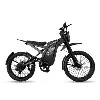

1. Bicycle
The total length of the bicycle shall not exceed 185 cm, the width shall not exceed 50 cm, and the weight shall not be less than 6.8 kg. The length of the bicycle seat should be 24-30cm, the distance between the center axle and the ground should be 24-30cm, and the diameter of the front and rear wheels of the bicycle must be the same. The maximum diameter of the wheel is 70 cm and the minimum diameter is 55 cm. The bicycle used shall be a dead flywheel and shall not be equipped with speed change device and brake.
2. Track
The distance of mountain biking race is 40-50 kilometers. The flat section shall not exceed 15%, and the rest are uneven sections. The route usually consists of downhill section, mountain climbing section, rural section, gravel section, forest section and short asphalt section.
A signboard shall be set up every 1km on the track to indicate the distance from the end point. The road sign is 20cm wide and 40cm long, and it is placed 1.5m from the ground. Road signs should accurately indicate the race route and subsequent changes in road conditions, as well as intersections and all potentially dangerous sections.
The starting section must be wide enough for drivers to start safely. The front and back of the finish line should have a long straight line and a wide view to ensure the safety of the final sprint and the buffer after the sprint.
3. Frame
Because mountain bikes are hard to drive, the frame of mountain bikes should be smaller than that of ordinary bikes. This structure takes into account the characteristics of cross-country bicycle sports. It is convenient to operate a bicycle on different surfaces.
The material, structure and design style of the frame are very important for manufacturing a high-performance, safe and reliable bicycle, because the bicycle frame needs to withstand the impact caused by various reasons.
4. Handlebar
The standard handlebars are flat and the handshakes are longer. The upright handle, also known as the tilt handle, can ensure that the rider can maintain a comfortable posture during cycling. The length or height of the riser of the handlebar can be adjusted, and stretching can increase the distance between the handlebar and the saddle. Drivers usually lower the riser. Lengthening the handlebar grip is also conducive to the transmission of energy, and at the same time, the handlebar grip posture of the driver has more choices.
5. Riding equipment
(1) Helmets
Usually, air holes are designed on the shell to guide backflow and heat dissipation, and insect proof nets are designed on the lining. More importantly, it can well protect the head from serious injury. Riders should choose helmets with light weight, good wind conductivity, breathability and relevant safety certification.
(2) Riding shoes
There are special self-locking shoes and cross-country riding shoes. The sole of self-locking shoes is generally formed by carbon drill. The sole has a small concave groove, which is matched with the lock on the foot. When riding, the self-locking shoes of the cyclist and the foot are locked together to prevent separation. The soles of cross-country riding shoes have deep anti-skid patterns. The soles are generally hard, and the vamps have breathable nets.
(3) Riding clothes
Made of special materials, it has good perspiration, breathability, warmth retention and good visual effect, which is convenient for passers-by to avoid drivers.
6. Kettle
The water bottle is divided into a water bottle placed on the water bottle rack and a backpack type water bag. The kettle is fixed on the frame, which is made of plastic and aluminum alloy; The water bag needs to be carried on the back, which will increase the weight bearing of the ride. Generally, it is made of composite waterproof materials.