

Whether it is interviewing cycling enthusiasts, visiting bike shops, or browsing social platforms, we can all feel that Cityride is becoming a new way for young people to unlock outdoor sports and explore urban space. And this new trend seems to be "reasonable and well-founded". China, once known as the "bicycle kingdom", is still a major bicycle manufacturing country today. Coupled with the popularity of shared cycling, China is fully capable of welcoming this trend of urban cycling revival. Among them, Shanghai has become the "leader" of the Cityride revival trend with its unique temperament. But how to embrace this trend of Cityride revival and continue it, Shanghai needs to do more.
The urban cycling system needs to be improved
In urban road traffic planning, bicycle lanes and motor vehicle lanes are mixed together, and temporary restrictions and diversions, parking spaces occupying bicycle lanes, etc. often occur, which will hinder the healthy development of urban cycling. In order to solve such problems, we need to make more detailed plans for urban cycling roads.
In Copenhagen, Denmark, there is a design called "Green Wave", which is to form a continuous bicycle flow on the main road leading to the city center through the coordinated control system of traffic lights between regions. During the morning rush hour, people who commute by bike can easily shuttle from the suburbs to the city center without frequent parking; and during the evening rush hour, the green wave flows in the opposite direction, and people who ride can follow the green wave to quickly leave the city. This is a setting suitable for cyclists formulated by Copenhagen based on the urban road construction plan, which avoids the possible risks between motor vehicles and non-motor vehicles, and also adds a unique symbol to the urban cycling culture.
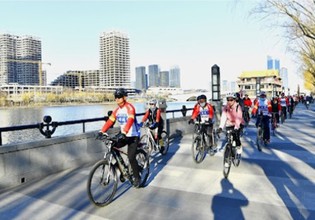
In Shanghai, in September 2021, the "Shanghai Slow Traffic Planning and Design Guidelines" was officially released. The guidelines provide guidance on the scope and content of Shanghai's slow traffic planning from six aspects: "building a continuous and complete slow traffic network, building a complex three-dimensional slow traffic system, creating a convenient and efficient docking system, finely improving slow traffic design, innovating the quality of slow traffic system, and creating a new slow traffic landmark with quality characteristics". The guidelines focus on guiding the slow traffic system with transportation functions as the main function (including municipal roads, public passages, etc.), but also take into account the greenway system with recreation and fitness as the main function. At the same time, the guidelines also encourage the construction of a complex three-dimensional slow traffic system, carry out comprehensive three-dimensional development in comprehensive transportation hubs, rail transit stations, dense commercial and office areas, and build an efficient and functional all-weather three-dimensional slow traffic system. In the more than two years since the official release of the "Shanghai Slow Traffic Planning and Design Guidelines", Shanghai has successively planned and rectified the roads along the Huangpu River and Suzhou River. The slow traffic system roads along the riverside and Suzhou River have become more complete, and "Riding along the River" and "Riding along the Suzhou River" have also become popular routes in Shanghai Cityrde. However, the construction of the slow-moving system is still ongoing. The total number of cafes and convenience stores along the streets of Shanghai has exceeded 10,000. The commercialization of the streets and the perfect planning of urban cycling roads will give Citymide greater room for development.
Combining hard planning with soft services
In addition to the need to improve the urban cycling system, urban cycling also requires a lot of soft services. For example, repairing bicycles, pumping up tires, and simply providing supplies for cyclists can make cyclists more realistically appreciate the efforts of urban builders in establishing a slow-moving system. Abroad, Copenhagen, Denmark, as a city with a high degree of bicycle friendliness, has made many detailed plans in the urban cycling system. At crossroads, railings for cyclists to step on or lean on can be seen everywhere, and cyclists no longer need to support themselves with one foot on the ground; the countdown display that can be seen 100 meters away from the intersection allows cyclists to know the road conditions in advance... and Zurich, Switzerland has launched the first "Bike-In Coffee Outdoor Bicycle Seat" where commuters can drink coffee without getting off the car. These are all things that Shanghai city builders can learn from and refer to when improving the construction of urban cycling roads and creating a better cycling atmosphere for Cityride. At present, in Shanghai, many flagship stores of bicycle brands are equipped with repair studios and coffee rest stations to provide relevant repair and supply services for cyclists and cycling communities.
A more distinctive "bicycle riding business card"
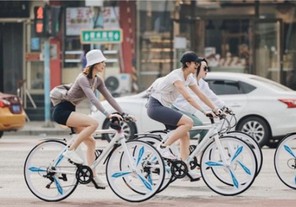
Cityride can be a ride for one person or a group, and can also be combined with the city's iconic products such as cultural tourism, exhibitions, and ecology. Cityride can connect scattered attractions and commercial spaces, which can not only expand the scope of tourists' activities in the local area, but also enable multiple business formats to complement each other and meet people's diverse needs. Amsterdam in the Netherlands integrates bicycle routes with urban parks. Chengdu in China is also taking the same approach. According to statistics, Chengdu has built a total of more than 6,500 km of urban greenways, connecting 1,500 parks of all sizes in the city. The ecological zone around the city has been built into a super "green ring" of the city, and more than 100 km of first-level greenways are also fully connected here. These designs can all become the city's unique "bicycle riding business card". The planning of Shanghai's "one river and one river" cycling road may also become Shanghai's unique "bicycle riding business card". Whether it is out of fashion or love, people living in this city are quietly changing their lifestyles because of Cityride. Many bicycle shops that were once roadside stores can now enter the downtown business district. The stores cover not only the bicycles themselves, but also the cycling culture behind them. We can see more and more cycling community activities on the streets of Shanghai. In short, more and more people are Cityriding.
Cityride may no longer be just a "foreign" term. Its appearance has brought bicycles back to the public's attention, allowing more people to ride bicycles to discover and explore the beauty of Shanghai, and also ushering in the revival of Shanghai's urban cycling culture. It may take some time for Shanghai to truly become a "bicycle-friendly city", but as long as the city and cycling always maintain a close connection, this future is worth looking forward to.
Panda Group will also participate more in cycling charity activities, bring more bicycle products to the market, and allow CityRide to continue to flourish.