

Many people have the misconception that once a mountain bike carbon fiber frame or part is damaged, it is completely discarded. But this is actually not entirely true. Carbon fiber frames, like steel or titanium frames, can be repaired in some cases. The treatment process is not much different: the damaged part is cut down and bridged with new material. The new material is put through a series of processes, cementing, sanding, and painting to make it match the original material. If you get a professional carbon fiber repair, you won't even be able to tell where the original damage was.
But this work requires a high degree of professionalism. Although there are carbon fiber repair tools on the market, they are mainly for kayak paddles. Bicycle frames are complex and have many load-bearing structures that are subject to stress during sprinting and high-speed cornering. If your carbon frame is damaged, you can get it repaired aftermarket by the manufacturer, or you can get it repaired by a more reputable third party. Never try to do the repair yourself!
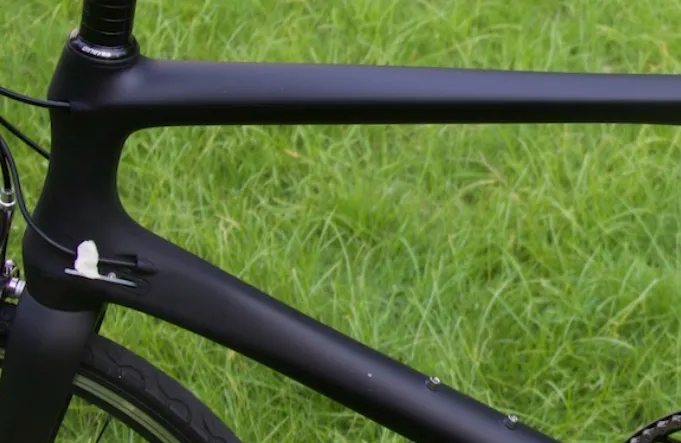
On top of that, traditional frames are built using stainless steel and titanium, but every frame, tire, handlebar, or other part made with carbon fiber cloth requires a lot of hand building. Whether it's a small factory, such as Crumpton producing a custom frame, or a large company such as Giant or Trek mass-producing frames, there is a lot of manual work involved.
The entire manufacturing process is almost exclusively automated: a computer-controlled machine cuts the single carbon fiber layer from the carbon fiber cloth. After that, the carbon composite frame or parts must be assembled precisely in a mold according to the sequence of the layers, a process that has yet to be automated. In a small production line, one person might be able to laminate and assemble the entire frame. In a larger line, workers would laminate a specific part of the frame, such as the lower bracket part, and then pass that part to the next worker to laminate the tube part and finally place it in a mold for curing.
Even the post-curing process - where the frame is removed from the mold, cleaned, and painted - requires great care. Professional workers will check the frame or parts for problems, such as wrinkles or stains due to the carbon fiber layer not being smoothly compacted, which can make the frame a defective product.