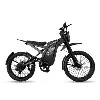

A slow recovery in Cambodian bicycle exports to the EU has prompted the country's five bicycle assemblers to look for new markets. The country, once the largest bicycle importer in the 27-nation European Union, with China and Bangladesh also joining the fierce competition as major mountain bike manufacturers.
According to the General Administration of Customs of Cambodia, in the first eight months of this year, Cambodia exported bicycles and e-bikes worth US$278 million (€256 million), a year-on-year decrease of 30%. After exports fell by more than 50% in 2023, the downward trend in exports to the EU continues this year.
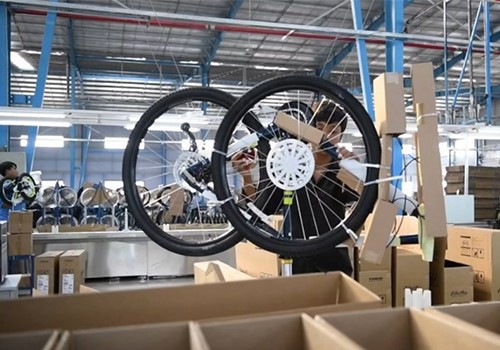
Cambodian Ministry of Commerce State Secretary Payne Sowechet attributed this to the global economic slowdown leading to less consumer spending on non-essential items such as bicycles. Relevant media said: "Despite the decline in bicycle exports, Cambodia's bicycle exports still lead the region."
Although e-bike exports remain small, production has gotten off to a notable start this year. In 2023, the 27 EU countries imported only 1,035 electric bicycles from Cambodia. From January to August this year, this number has increased to 13,838 vehicles. Cambodia seemed to have entered the market as early as 2022, exporting 5,089 e-bikes to Europe, but it would not be until 2024 that they would be able to continue this growth momentum. Whether this volatility between 2022 and 2024 is the result of market instability remains to be seen, but Cambodia is proving capable of playing a leading role in e-bike production.
The export value of electric-assisted bicycles also shows a similar development trend, growing from 1.8 million euros in 2023 to 12.4 million euros in 2024.
From January to August this year, the number of bicycles imported by the EU from Cambodia decreased from 717,572 units in 2023 to 568,341 units. At the same time, the average value per bike has dropped significantly from 377 euros last year to 262 euros in 2024. Cambodia remains one of the world's top five bicycle exporters, exporting bicycles to the EU and the United States under free trade agreements and other trade agreements, in addition to the Generalized System of Preferences (GSP) and Most Favored Nation (MFN) schemes.
Decathlon's major move: investing in an electric bicycle refurbishment and sales company
Decathlon has recently taken a major step in the sales of refurbished e-bikes in Europe. They have made a significant investment in a leading German company, hinting that other major bicycle brands may make similar moves in the near future.
The French giant has just announced a stake in German company Rebike(R), a leader in the refurbishment and sale of "like-new" second-hand e-bikes in Germany, Austria and Switzerland. The partnership was made through Decathlon Pulse, Decathlon's investment arm and startup incubator, with the goal of driving sales growth of refurbished e-bikes in Europe.
In the next new stage of development, Decathlon will continue to increase its commitment to bicycles as a way of travel in Europe. Data shows that sales of electric bicycles in Europe have doubled in the past five years, and it is expected that there will be 100 million electric bicycles on the European market by 2030. However, this growth needs to be sustainable, so companies like Rebike are committed to the refurbishment and secondary sales of electric bicycles.
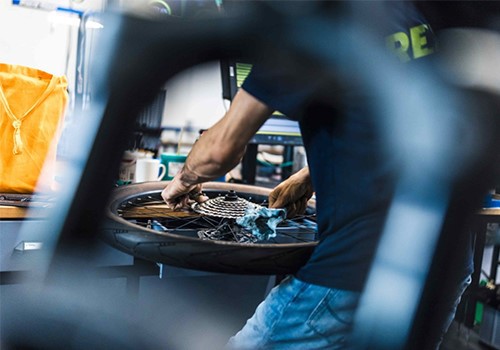
Through its investment in Rebike, Decathlon Pulse further consolidates its commitment to the circular economy and its support for the professionalization of the European electric bicycle second-hand market. Decathlon will use Rebike's global coverage, omnichannel sales experience and international infrastructure to provide support. However, Rebike will still remain an independent operator to enhance its expertise and advanced refurbishment technology, as well as digital integration in industrial processes, and optimize the business experience, from collecting old electric bicycles from partners and bicycle rental companies to reselling electric bicycles on Rebike.com and other online and offline channels.
Thomas Bernick, CEO and co-founder of Rebike, said: "By addressing consumer accessibility issues and driving the reuse trend, our refurbished electric-assisted bicycles have the potential to become the standard in the bicycle industry. We are excited to take this step with Decathlon Pulse and leverage their global experience and international vision to accelerate our operations in new markets."
Franck Vigo, CEO of Decathlon Pulse, said: "We are very excited to continue to drive Decathlon Pulse's growth with such a well-known partner as Rebike. This investment not only perfectly fits our strategy to accelerate sustainability, but also puts us at the forefront of the circular economy in the bicycle field. Together, we not only enter the growing second "Our alliance with Rebike is a beacon of innovation in the bicycle industry and demonstrates the huge potential of the circular economy," said Sophie O'Kelly de Gallagher, Circular Economy and Sustainable Investment Director at Decathlon Pulse. "By combining our global reach with Rebike's expertise in the e-bike industry, we are driving positive impact in the sports ecosystem and setting new standards for sustainable mobility." Andrew Shannon, Partner at Circular Capital, said: "We are delighted to welcome Decathlon Pulse as an investment partner to Rebike and look forward to benefiting from Decathlon's North Star strategy in the e-bike market. Our joint investment further strengthens Rebike's significant progress and its position as a refurbishment and sales expert in Europe's largest e-bike market."