

01.Every time the inner tube is repaired, it is flat again just after it is put back.
If the hole in the inner tube is on the inside, the tape may be misaligned, causing the tube to be cut by the spokes; if it is on the outside, there may be some small, sharp foreign objects in the tire. Carefully grope the inside of the tire with your fingers to find the foreign object and remove it.
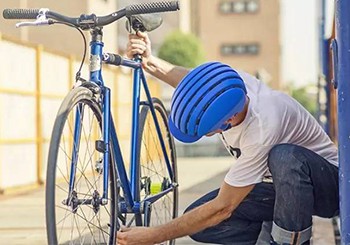
02.frequent punctures
Inflate the tires more. Especially for road bikes, you might as well hit the recommended maximum tire pressure.
03.Reinstalled the tire, but it doesn't fit into the rim properly
Release the air, twist the tire back and forth, and rub the tire into the correct position with your bare hands. Push the outer tire to the center and check for any exposed inner tube. Re-inflate when the inner tube is fully inserted into the outer tire.
04.The patch does not bond to the inner tube
Use more glue and let it dry completely - about five minutes. (Don't blow with your mouth just to dry faster - this will leave moisture on it and prevent the glue from sticking). When using the patch, remember to avoid touching the adhesive surface with your fingers.
05.wheels creaking
Possibly a loose spoke. If the tension is balanced, the sound may be caused by a slight bump in the crossed spokes. Lubricate the intersection with a small amount of oil and wipe off excess oil.
06.noise when pedaling
Tighten the crank bolt. If the crank still squeaks, remove it, grease the axle core, and reinstall the crank.
07.The big chainring shakes, and the chain rubs against the front derailleur guide
It may be that the disk screw is loose, look for the loose disk screw.
08.Front derailleur shifting incorrectly
Removed the chain and chainrings, cleaned the chainrings, but the front derailleur was not shifting properly. The chainrings may have been installed upside down. Remove the chainring and install it correctly. Usually, the crank bolt fits right into the mounting hole of the chainring. Seen from directly above, make sure the chainrings are evenly spaced.
09.You try to remove the peg, but it turns with
Use a wider flat-blade screwdriver or a special disk nail tool to fix it in the groove on the back of the disk nail.
10.silk
You tried to remove or adjust the crank, but it slipped - now it can't be removed. Go for a few more laps around. The crank will come loose and you can remove it.
11.The shifter tube rubs against the frame and wears off a piece of paint
Put scotch tape on the contact area.
12.Improve noise and shift inaccuracy
Adjusting the rear derailleur still doesn't improve the noise and shifting inaccuracies. The sprocket locking ring may be loose, causing the sprocket to vibrate slightly and make a noise when it turns. A special tool is required to fully tighten the locking ring, but you can tighten it with your fingers as far as it will go for a safe ride home or to a nearby bike shop.
13.The flywheel is rusted
A small amount of rust won't speed up the sprocket wear, so don't worry too much about it. In general, using a little more oil will prevent continued rust, and the chain can wear off the rust while riding.
14.Pedal jumps when using certain gear ratios
There may be something between the sprockets. If you can see lumps of mud, weeds, leaves, branches, or any foreign objects stuck in the flywheel, dig it out. These things prevent the chain from properly engaging the cassette. If there is nothing, the sprocket may be worn out. When this phenomenon occurs, it usually means that the chain and flywheel need to be replaced.
15.The front derailleur cannot be accurately shifted to a certain chainring
Check that the guide plate is parallel to the chainring (viewed from directly above), loosen and reposition the front derailleur as appropriate. If parallel, you may need to adjust the high/low limit screws, preferably by a car shop or someone with experience.