

When mountain bike manufacturers launch new models, they often emphasize the new model's improved stiffness, weight, comfort or aerodynamic performance. Of these parameters, stiffness is the most important, which is the key factor in making a bike as efficient as possible in force transmission. However, there are many details hidden under the general concept of stiffness.
Among the many selling points that mountain bike manufacturers mention in order to sell their products, "increased stiffness" always appears. This is actually a parameter that many people talk about but few people understand what it really means. However, just like the weight of the bicycle, many people overestimate the role of increased stiffness. Stiffness is not necessarily stronger.
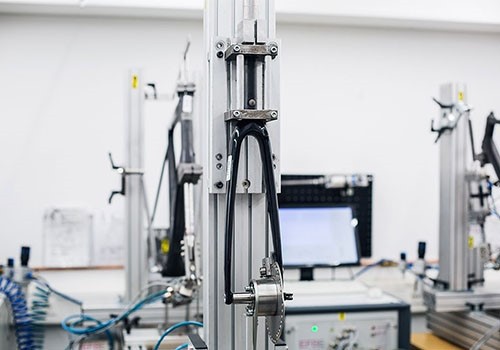
What is Rigidity
Before we start analyzing what this parameter means, the first thing to do is to clarify what stiffness is. According to the definition commonly used in engineering, stiffness is the ability of a structural element (in the case of a bicycle, the frame) to resist deformation caused by the application of external forces.
That is why when we talk about stiffness, most people immediately think of the force we apply to the pedals and how much the frame deforms laterally with each pedal stroke.
However, this is only one of the forces that affect the frame, and other forces, such as the effects of centrifugal force when cornering, the reaction to bumps in the road, and other irregularities encountered on the road, are often not taken into account.
The engineers who develop bicycles must take all of these aspects into account to achieve not only extremely strong output of the bicycle, but also the correct impact absorption capacity, while making the whole bicycle as light as possible.
Therefore, when talking about the stiffness of the frame, we must evaluate it in different areas of the frame, so you will find that this parameter is more interesting than the other.
In simple terms, achieving the highest possible rigidity is not a problem. Simply stacking the materials, especially if the raw materials have a high tensile strength, will result in a more rigid structure. In addition to the material, the cross-section of the tube is also important. The larger the cross-section, the greater the rigidity. But the side effect is that the weight will inevitably increase.
The arrangement of the carbon fibers is of course also very important. The current mainstream method relies on different arrangements of unidirectional fibers, which are characterized by high rigidity in the direction of the fiber arrangement, but very little rigidity in the direction perpendicular to the fiber. This makes it possible for engineers to achieve corresponding uses in different areas of the frame depending on how each fiber cloth is positioned.

Getting the perfect fit requires very complex computational work, which fortunately is done by engineers in the 21st century mainly on high-performance computers using finite element analysis software (FEA), which allows engineers to generate hundreds of virtual frames and simulate their response to different forces applied.
The frame design goal is to achieve balance and add stiffness only where it is needed. To this end, we define several types of stiffness in bicycle frames.
Stiff pedaling – lateral stiffness
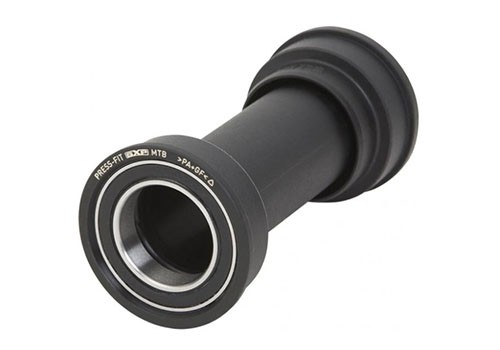
First, the one we usually consider the most is lateral stiffness, which is measured in their labs by applying a load to the bottom bracket to simulate the forces applied by pedaling. This stiffness mainly measures the degree to which the bottom bracket area deforms every time our legs step on the cranks. Interestingly, lateral stiffness must be as high as possible, because by minimizing lateral displacement, the vector force we generate can be the maximum force transmitted to the rear wheel.
In addition, the rear triangle must also be stiff enough not to deform when the chain transmits force to the rear.
This is the parameter we bike reviewers try to assess how easily a bike can accelerate quickly, and this performance is particularly important for climbers and sprinters who demand that the bike can still maintain full power when launching an attack or facing a large group sprint. However, at cruising speeds, most frames on the market can be said to be very efficient, because the power output is more stable and not much different from the output of ordinary enthusiasts.
To achieve the goal of high lateral bottom bracket stiffness, bicycle manufacturers have been committed to selecting wider bottom brackets and 30 mm cranksets. The chainstays are also often very thick, especially on their sides, but they are not too thick to avoid compatibility with the rear wheel. The bottom bracket and chainstays are often asymmetrical to balance the response to the different forces generated on the drive side and non-drive side. Different carbon fiber arrangements are also used to maximize this effect.
Precision control – torsional rigidity
A more important but less mentioned parameter is torsional stiffness. This defines how much the frame twists under different forces. This twist affects the alignment of the front and rear wheels and therefore has a significant impact on the handling of the bike, especially when cornering.
When cornering at high speed, the bike applies centripetal force to the inside of the curve, which creates centrifugal force that tends to move us out of the curve. Due to the differences in the structure of the fork and rear triangle, the forces on the front and rear wheels are not the same, which causes the wheels to be misaligned in their moving line.

For the rider, we would describe this as imprecise handling. Basically, when the rider draws a line in the corner like a paintbrush, the bike does not give you the tight response you want. On the contrary, when a bike performs well in this parameter, it is not only easy to draw a curve, but also with a simple movement, you can point the bike to the center of the bend, and after cutting through the center of the bend, it gradually corrects your longitudinal angle of the bend with a very uniform progression, and the reaction to sudden changes in the direction of the front of the bike in the cornering line will also be faster. In general, the whole cornering control will become light and direct, and there will be no sluggish feeling of those less rigid models.
In order to prevent the frame from twisting easily, manufacturers usually strengthen the fork body and use a larger steering tube. In fact, the headset bearing has been increasing year by year, from the traditional 1 inch to the 1.5 inch bearing that is often seen in the lower bowl. This is also the reason why the downtube of a bicycle is usually the widest cross-section, because it is the main supporting part of the frame structure.
But there is another aspect to consider. It is that lateral and torsional stiffness must be balanced to give the frame the best performance without any compromise. On the other hand, too much lateral stiffness at the front and rear axles can make the bike difficult to ride when the road conditions are not perfect, because it will rebound after every road impact. So there are more aspects to consider than just these.
Smooth ride – vertical rigidity
If the goal of the previous points is to achieve the strongest possible rigidity, then in the vertical plane, it is the opposite: a certain rigidity to avoid the bouncing effect, but at the same time, enough deformation capacity to resolve the irregularities of the road surface.
This is a very difficult parameter to adjust because it is affected by the weight of the rider, and the design of the bicycle takes into account different types of riders. Of course, it is now possible to infer the average size of a rider of a certain size through big data analysis of riders, so that engineers can adjust this parameter more accurately.

Generally speaking, like lateral rigidity, the cross-section of the frame tube and the arrangement of the carbon cloth will have a significant impact on vertical rigidity. The adjustment of vertical rigidity also strives to achieve a perfect balance between vibration absorption and force transmission efficiency without affecting lateral rigidity.
Vertical rigidity usually affects aerodynamics, because the aerodynamic tube will increase the vertical cross-section of the tube, thereby increasing vertical rigidity and reducing the horizontal cross-section, which will affect lateral rigidity, which is completely opposite to what the frame seeks.
The solution to this problem usually relies on a truncated virtual tail tube and increasing the horizontal cross-sectional area of the tube, but this not only affects weight, but also aerodynamic performance.
What if the bike is too stiff or too soft?
As we said at the beginning, if the absolute value of rigidity is important, it is very easy to make a bicycle extremely stiff with modern materials. However, few of us can last more than an hour on such a bike, not only because the changes in the road surface will quickly shatter our arms and backs, but also because the reaction to any small operation is too fast, forcing us to be nervous all the time.
In fact, at a certain period in history, we once had such a bike, and although they felt extremely wonderful when you first stepped on it, especially when accelerating, it soon became clear that such a bike was not practical in the real world. As the kilometers passed, it hurt us more than it helped, or on each downhill bend, it gave us nothing positive feedback except too much confidence in cornering. I believe everyone still remembers the all-aluminum racing models that were popular in the early 21st century. Those were real "two wheels and a pole, nothing else to do".
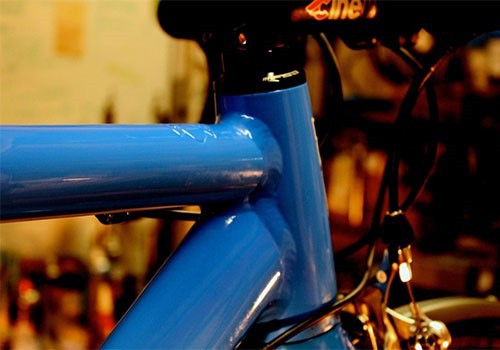
At the other extreme, we used to think of them as "cotton bikes". Probably the kind of bikes that require continuous high-intensity output to maintain cruising speed, and you will feel that more than half of your power is gone, not to mention the response of an old man when you accelerate.
Such bikes will also evoke people's nightmare memories when cornering and tracing. I believe that riders who own mid-range steel frame road bikes can understand what I mean. Although we can call such bikes "elegant in shape and luxurious in texture", those who understand will understand.
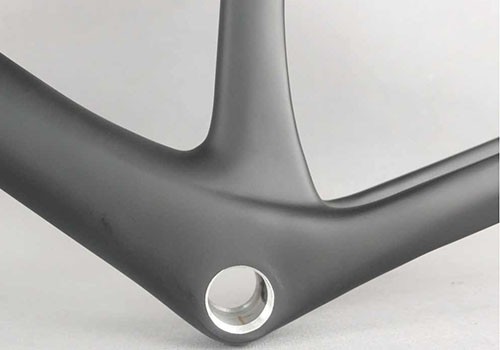
After the above introduction, we know that in most cases, higher rigidity will definitely be more popular, but it must be rigorously tested in every area of the frame and finally achieve a perfect balance of various indicators. In short, the overall rigidity of the frame has increased significantly over the years. On the latest generation of models, you may only need to step on it a few times, while on the same model that may be ten years ago, you may need to step on it a lot more. Through such a comparison, you can very intuitively feel the huge impact of the development of frame design knowledge, the enrichment of design tools, and the improvement of material quality on bicycle performance.