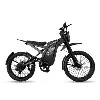

1. Most of the raw material carbon comes from Asia
Mountain bikes carbon fiber frames are made from polyacrylonitrile (PAN) fibers. Polyacrylonitrile fibers are heated to very high temperatures, and all the non-carbon material in the fibers is burned off, leaving only a series of very thin, long fibers. The more adequate the processing, the more rigid the material becomes.
This is a complex industrial process, and only a few companies in the world have the capability to manufacture raw carbon fiber materials. Through a 2010 U.S. Department of Energy report, we can find that over 90% of the world's carbon fiber supply comes from just six companies: Toray, Teijin Group, Mitsubishi Rayon, Trotec America, Hexcel and Cytec America. Toray, Teijin and Mitsubishi are responsible for almost two-thirds of the world's carbon fiber production. Zoltec, Hexcel and Cytec are headquartered in the United States and produce roughly less than one-third of the world's carbon fiber production.
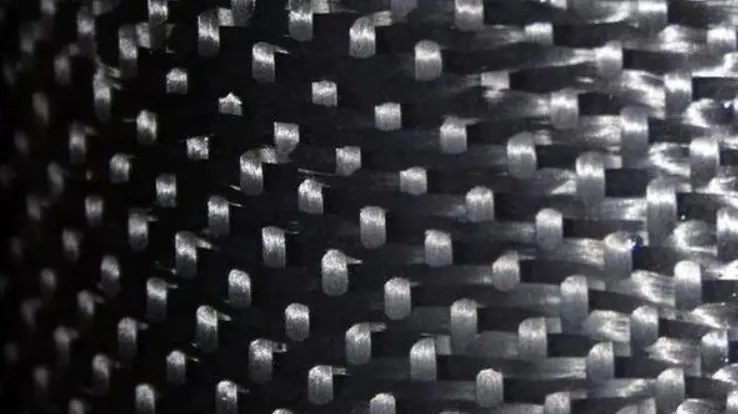
2. There is more than one type of carbon fiber used in bicycles
Carbon fibers are available in multiple presentations: raw filament, fiber cloth, and short-cut fibers. Short-cut fibers are generally used in pedals. Carbon fiber cloth is generally used in frames. Carbon fiber cloth is exactly what its name sounds like: a continuous carbon fiber cloth that looks a lot like a rolled sheet of fabric that gets wound on a giant spool. Raw filaments are relatively rare in the bicycle industry, and only a few bike manufacturers have the production capacity to do so.
3. In addition to carbon fiber, the frame needs ...
What we usually call "carbon fiber" is actually carbon fiber composite material, and carbon fiber composite material is not the only material in your bike's frame. That's because carbon fiber's ultra-high stiffness is conditional: when it's just carbon fiber composite by itself, it's very fragile and has a tendency to split and break. To preserve its properties, carbon fiber is dipped in epoxy resin (a gel-like material) before entering the mold, forming a composite material. Most carbon fiber used in the bicycle industry is processed in this form in a process called "prepreg".
The resin performs two tasks. The first task is to keep the carbon fibers together. The second task is that the resin adds toughness and durability. The slight plasticization will deform upon impact (e.g., impact or debris strikes), thus helping to absorb the pounding without causing severe tearing of the fibers.
4. The carbon fiber used in the frame is a mixture
A good carbon fiber frame is made from a mixture of carbon fibers, with different types of carbon fibers being used in different positions of the frame for specific purposes. High-modulus fibers are expensive (because of the complexity of the process), so bike companies are smart enough to use relatively small amounts of high-modulus fibers in critical areas like the air tube, bottom bracket, and rear fork to resist pedaling forces and make the bike stronger. But the high modulus fibers are placed in molds with standard modulus, medium modulus and high strength fibers to produce the durability, performance and ride quality that a good carbon fiber frame should have.
Shandong Yifashun Materials Co., Ltd. is a group technology company integrating R&D, production, sales and service. The group is committed to providing intelligent cycling solutions for human beings around the world.