
Tubeless tires are becoming more and more popular these days because of their many benefits: they can be used safely at lower tire pressures, have good comfort, and have no inner tubes, relying on self-replenishing fluid to plug small punctures. It may sound like installing tubeless tires is difficult, but it doesn’t require the right expertise.
In this guide, we’ll walk you through it step-by-step and explain exactly how to install tubeless tires. Although we're demonstrating how to use road bike tires in this article, the installation process for gravel and mountain bike tires is exactly the same.
What is needed for tubeless tire installation?
To understand how to install a tubeless tire, you first need to explain what a tubeless tire installation consists of and what each component does.
1. Tubeless tire pads
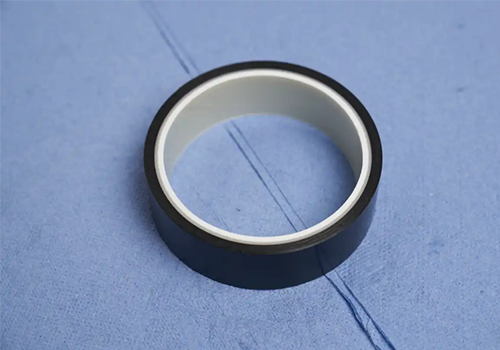
Tubeless tire pads are taped to the inside of the rim to form an airtight barrier that prevents air from escaping through the spoke holes.
Tape-style tires are typically found on road, gravel or mountain bikes and are available in different sizes to suit the width of your rim. Some rims come with pre-applied tire pads, and there are even some products on the market, such as Campagnolo rims, that do not require tire pads because they have no spoke holes.
2. Tubeless tire valve
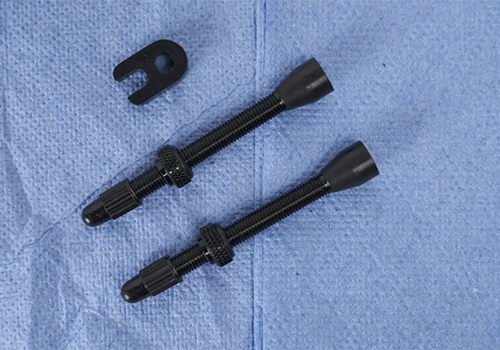
The function of the tubeless tire valve is the same as that of the regular inner tube French valve. It is usually mounted on a conical plug located in the rim valve hole. When the locking ring tightens, it deforms the plug around the rim valve hole and tire pad, creating an airtight seal.
Any good tubeless valve should have a removable valve core. It can prevent the valve core from being clogged, facilitate replacement, and make it easier to add self-replenishing fluid. Valve core and valve kits usually come with specialized removal tools, but if not, they can be purchased separately. Some good bicycle multi-tools also include this tool.
3.Sealant/Self-replenishing fluid
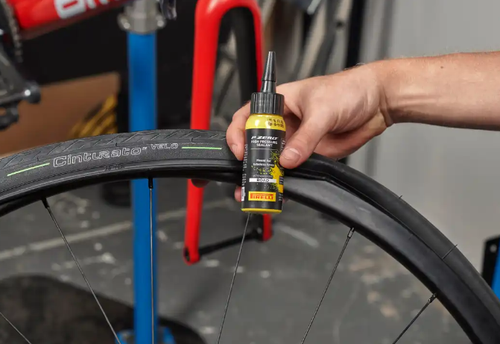
Sealants/self-refilling fluids are generally liquids that are designed to plug small holes in your tires, filling them before you even notice the puncture. Generally speaking, the main material is latex-based.
4. Tubeless tire rims
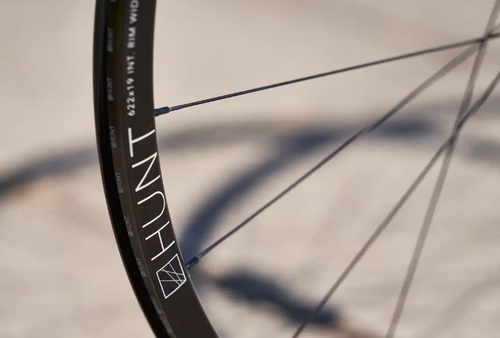
Like tires, tubeless rims are visually identical to regular clincher rims. However, a closer look reveals that the rim hook (where the tire interlocks with the rim) has a slightly different profile than with tubeless tires. Tubeless-ready versions are usually deeper.
Some special features include the fact that most rims from Mavic are manufactured to UST (Universal Tubeless System) standards. The standard states that rims must be sealable without tape and have no holes in the rim base. However, this setting is still not enough, and common rims still have drilled holes.
Hookless rims have been the norm for years, but hookless rims are becoming more common on road and gravel bikes. Unlike hooked hoops, hookless hoops have straight, vertical sides and are generally only compatible with tubeless tires. If your rims are hookless, double-check that your tires are compatible and make sure when inflated they don't exceed 73psi, which is the recommended maximum tire pressure limit.
5. Tubeless tires
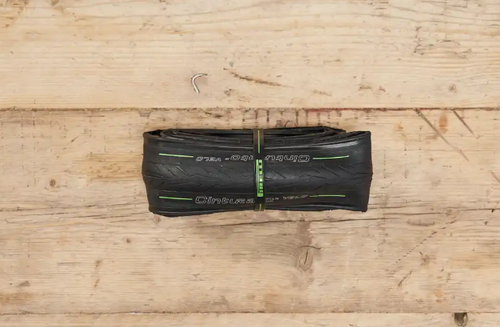
Tubeless tires may look the same as regular clinchers, but they have subtle and key differences.
The two main differences are size and profile, the inner bead of a tubeless tire is typically slightly smaller (or more accurately, the tolerances are tighter) than a clincher tire, and the profile of the bead is specifically designed to match that of a tubeless rim. Unique interlocking hooks.
Finding out whether a tire is tubeless-compatible is fairly simple, as the brand will often add a note on the tire itself: WTB's tubeless tires, for example, come with a "TCS" (Tubeless Compatible System) graphic. Most performance mountain bike and gravel tires are tubeless compatible, but this isn't always the case on the road, so pay attention to the label.
6. Tubeless tire pump (recommended but not always required)
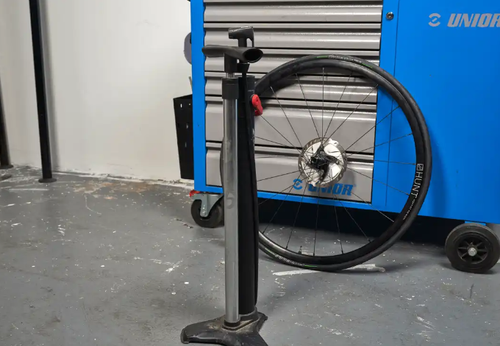
In order to get some tubeless tires into place, they may need to be suddenly inflated when first installed. The tubeless tire pump has a pressure storage chamber that is first inflated and then can discharge all the air in the chamber into the tire at once.
If you don't have a dedicated tubeless tire pump and you encounter installation problems, you can use an air compressor. Air compressors are very common in auto repair shops. Just make sure there is a French nozzle connector on the air compressor. We recommend against using CO2 inflators as they are not always compatible with sealants.
How to fit and install tubeless tires?
1. Prepare and stick the tire pads
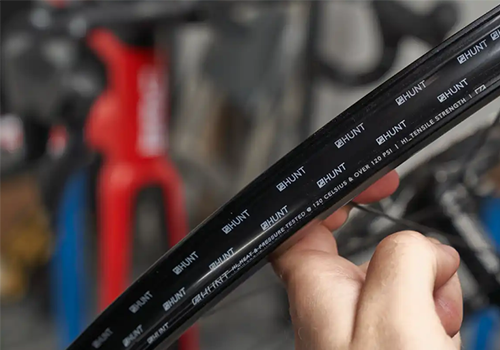
Before applying tire pads, make sure your rims are completely clean, dry and free of any old tape or self-refilling fluid. Of course, except for stubborn residue, avoid physical removal and use isopropyl alcohol and a clean rag to soften the old glue. And some brands, such as Muc-Off, also have special glue removers.
Starting from a few spokes that pass through the valve hole, use your fingers to press and install them into the recess of the rim, and pull the remaining spokes out for a distance, so that the pulled out part is in the center and tightened, then slowly Rotate the rim and the bead will lock itself into place, keep doing this to keep the tension high and ensure it stays well centered. After one circle, reach the starting position of the tire pad, with an overlap of about 5 cm.
Check the tire pads afterwards and if there is any damage, it is best to start over and re-apply a new tire pad instead of trying to repair it. After all, correct installation is a once-and-for-all job, and many unpleasant experiences during later use are caused by improper installation of tire pads.
2. Install the tubeless tire valve

First find the valve hole on the rim, then use a sharp object to push a protrusion from the inside out to mark the position of the valve hole, and then punch a hole in the tire pad from the outside to the inside. It is best to push the valve directly through the small hole to make the hole the required size. Do not use a sharp knife to cut the tire pad, which will tear the tire pad and not cut a round hole.
Push the valve down with your thumb to deform the plug and screw on the locking ring. It is best to apply a minimal amount of grease to the locking ring to make it easier to install and remove. Unless otherwise specified by the manufacturer, we recommend avoiding the use of tools to secure the valve, as this operation may cause excessive force and deformation of the valve and even the rim.
3. Install tubeless tires
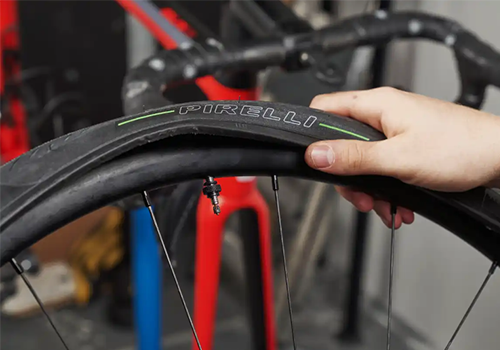
Installing road tubeless tires is exactly the same as regular clinchers, but can be a little more difficult due to the tighter bead. The good news is, since there's no inner tube to worry about, you have more freedom with your pry bar. But still be careful, as excessive use of a pry bar can easily scratch or otherwise damage the tire pads.
Once you have both sides of the tubeless tire installed, rub the tubeless tire back and forth and make sure it is seated in the dimple in the rim and on either side of the valve. If you find the last section of the tubeless tire difficult to install, you can bypass the rest and push the tubeless tire inward into the groove in the middle of the rim to make installation easier. Another tip is to apply a small amount of the tubeless tire self-refilling fluid you want to use on the sidewall of the tire to act as a lubricant.
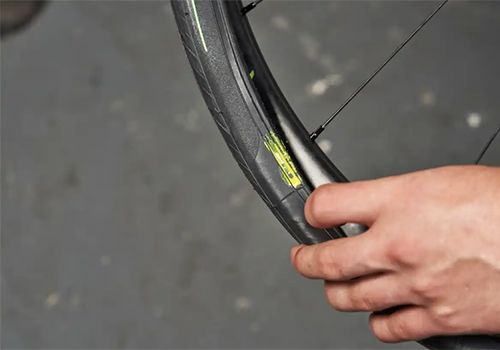
4. Add tubeless tire sealant/self-replenishing fluid
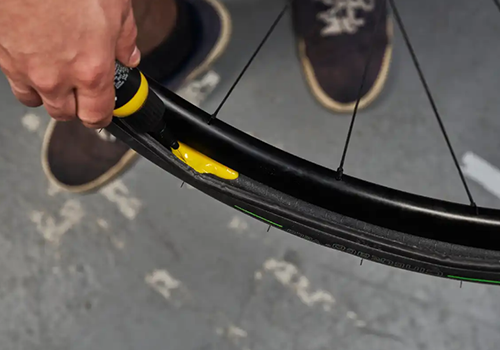
If you are confident in your ability to mount the tire easily, you can add sealant/self-refilling fluid before fully mounting the tire. Rotate the wheel set slightly after adding it to encourage the sealant/self-refilling fluid away from the last part of the tire you need to install so it doesn't get all over the place.
But if you are new and the tires and rims are new, you may find it much easier to add sealant/self-refilling fluid through the valve, which can be done via a syringe or small dispenser bottle. Finally, gently rotate the wheel to allow the self-replenishing fluid to evenly cover the entire inside of the tire.
5. Install in place
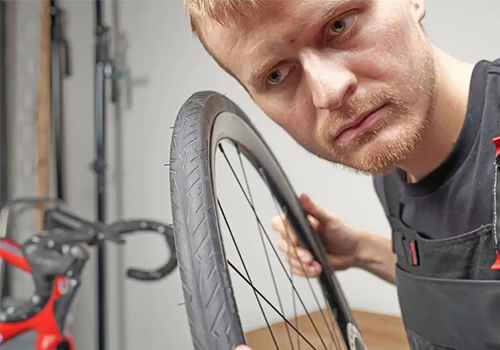
It is best to install the tire with the valve core removed, so that air can enter the tire most directly. After it is installed in place, use a high-pressure pump to quickly blow out the air and pop the tire into place. If only one side or part of the tire is seated, continue pumping until you hear a satisfying "pop" and the tire is seated around the entire circumference of the wheel. As mentioned before, if you can’t pump with a regular pump, you may need a tubeless pump or air compressor. Once the tire is in place, pick up the wheel and shake it vigorously and rotate it so that the self-hydrating fluid completely covers the inside of the tire. Once completed, inflate the tires to the recommended pressure.
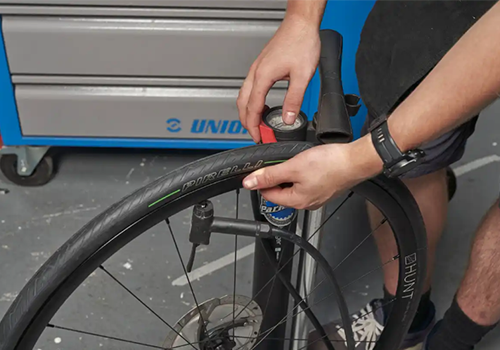
Many tires have markings that allow you to check that the tire is seated correctly. We recommend a short ride after installation so the sealant can completely cover the inside of the tire.
How to maintain tubeless tires?
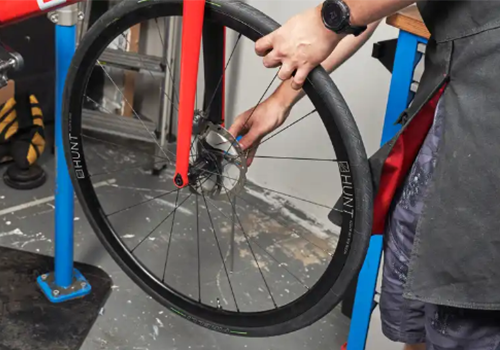
In most cases, tubeless tires are set-and-forget and you just need to refill the sealant/self-refilling fluid regularly as the self-refilling fluid will dry out over time. Different sealants/self-replenishing fluids dry at different rates, and in general it is best to get into the habit of checking every two to three months.
You can visually check the self-hydrating fluid by removing a small section of the tubeless tire, or you can observe the fluid level by inserting a zip tie (with the end cut off) into the valve core, which works effectively like a dipstick on your bike. .
After inspection pour some fresh sealant/self-hydrating fluid into the open part of the tubeless tire, or inject it through the valve core. It is recommended to completely remove the tubeless tires once a year or every 18 months and clean all parts thoroughly to remove any sealant that may be clogging the inside of the tire.