
There are so many different brands of children's bikes, and prices range from tens to hundreds of dollars, so let's have a good chat today! What factors do we need to consider when choosing a suspension children's bike.
1. The size of the bike
The size of the bike is either based on the height of the bike frame or the diameter of the bike wheels. In the United States, the size of a child's bicycle depends on the diameter of the bicycle wheels.
Children's bicycle sizes are generally between 10-20 inches, and children's bicycles of sizes 18 inches and below usually come with auxiliary wheels. The size chosen depends on the age, height and leg length of the child. Age is not the main reference factor, as each child has a different level of development and height differences can vary greatly between children of the same age.
|
Wheel Diameter |
Age |
Tall |
Leg Length |
|
12" |
2-3 |
85-100cm |
35-42 cm |
|
14" |
3-4 |
95-110cm |
40-50 cm |
|
16" |
4-5 |
110-120cm |
45-55 cm |
|
20" |
5-8 |
120-135cm |
55-63 cm |
|
24" |
8-11 |
135-145cm |
60-72 cm |
|
26" |
11+ |
145cm+ |
70cm+ |
Of course, the above data is only a reference value, for the choice of bike size, it is best to take the child to the physical store to feel the height, if sitting in the car, can be natural feet hanging down, and the palms of both feet can be flat on the ground, the knees can be slightly bent, then the height is appropriate.
2. The weight of the bicycle
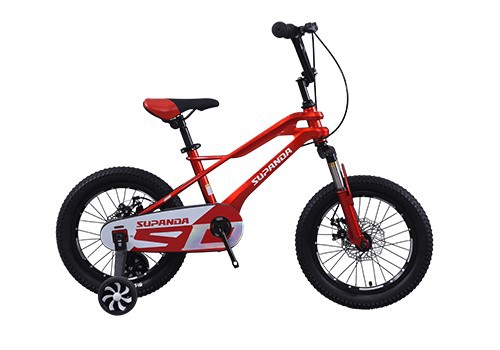
The weight of the bicycle body mainly depends on the body material, metal, more expensive, more durable, but for children, the weight of the bicycle is controlled at 50% of the child's weight is best. If economic strength allows, carbon fiber is the best choice, light weight, good quality.
3. Bicycle brakes
One type of brake is the roller coaster brake, also called the inverted brake (Coaster Brake), which uses the foot to reverse the pedal to brake. This is the most convenient for beginners because their hands are not strong enough to pinch the brake handle, so the inverted brake is the easiest for them to grasp.
The other type of brake is the handbrake, which means that we stop the wheel by squeezing the brake handle and driving the brake pads. The cost of a bicycle with a handbrake is slightly higher, but for children around 3 years old, the independent use of a handbrake must be under the guidance of their parents, and their hand strength is not enough to be fully capable of braking with both hands. At the same time, it should be noted that the brake system will cause a certain degree of wear and tear over time, so parents also need to regularly check the handbrake situation of children's bicycles to avoid safety hazards.
4. Distance between bicycle handlebars and seat
The most comfortable cycling distance is when the child is sitting in the car, the upper body posture should be upright slightly leaning forward, hands holding the handlebars, elbows have a slight curvature. If the arms are straight in order to hold the handlebars, it means that the distance between the handlebars and the seat is too wide, or the height of the handlebars is slightly short, resulting in the child not being able to ride comfortably. Of course, most of the children's bicycles nowadays can be adjusted by adjusting the height of the handlebars and seat to suit the child's riding needs at different times.
5. Bicycle speed types
The types of speed change are mainly divided into single speed and variable speed. Children's bicycles 12-16 inch are usually single-speed bicycles, variable speed is more suitable for older children, variable speed bicycles are also slightly more expensive, after mastering riding skills, you can adjust the speed of riding, increasing the fun of the cycling process.
Riding exercise can help children to get better physical fitness, children's bicycle, children's fun, safety, choose SUPANDA!