
Mountain biking is an exhilarating activity that provides plenty of outdoor adventures for riders. One of the essential components of a mountain bike is the brakes. Brakes play a vital role in ensuring that you're safe and in control during your ride. In recent years, mountain bike disc brakes have gained popularity, with many riders preferring them over traditional rim brakes. In this article, we'll explore how mountain bike disc brakes work and why they're an excellent choice for your bike.
Disc brakes work by applying pressure to a rotor mounted on the hub of the wheel. When the brake lever is pulled, the brake caliper presses the brake pads against the rotor, creating friction. The force of this friction slows down the wheel, eventually bringing it to a stop. Compared to rim brakes, disc brakes offer superior stopping power, better modulation, and are less affected by weather conditions such as rain or mud.
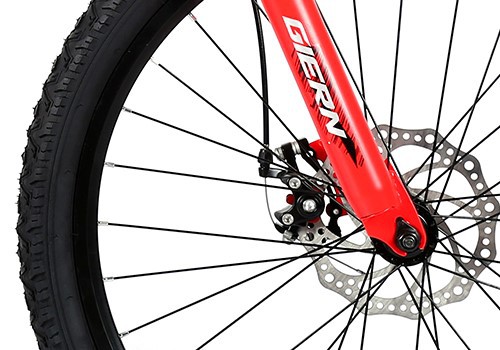
The brake caliper is the component responsible for applying pressure to the rotor. It consists of two brake pads that are held on either side of the rotor by pistons. When the brake lever is pulled, the pistons push against the brake pads, squeezing them onto the rotor and creating friction. As the rotor slows down, the brake pads continue to apply pressure until the wheel comes to a stop.
One of the significant advantages of disc brakes is their ability to modulate braking force. This means you can easily control how much braking force is applied to the wheel by adjusting the pressure on the brake lever. This makes it easier to control your speed, especially when navigating technical terrain where sudden braking is necessary.
Disc brakes are also more reliable in wet or muddy conditions than traditional rim brakes. Rim brakes rely on friction between the brake pads and the rim surface to slow down the wheel. In wet or muddy conditions, this friction is reduced, making it harder to stop. Disc brakes, on the other hand, operate independently of the rim surface, eliminating this problem altogether.
Finally, disc brakes offer more stopping power than rim brakes. This is due to the larger rotor size, which provides a larger surface area for the brake pads to grip onto. This increased surface area allows for more friction, which translates into better stopping power.
In conclusion, mountain bike disc brakes offer superior performance and reliability compared to traditional rim brakes. They offer excellent modulability, are less affected by weather conditions, and provide more stopping power. With their advanced technology, it's no wonder more and more riders are choosing disc brakes for their mountain bikes. If you're looking for a safer and more enjoyable ride, you can't go wrong with upgrading to disc brakes.