
There are many variables when calculating the ideal air pressure range for a mountain bike tire, such as the tire's width and carcass thickness, rubber compound, diameter, and rim width and overall shape. The conditions and type of trails you ride on, as well as your own riding style, can also have a major impact on proper tire pressure.
Knowing the correct tire pressure can improve the comfort, grip and speed of your mountain bike. If you get it wrong, then everything will go in the opposite direction.
Sound complicated? Don't worry because we're here to help and will give you everything you need to know to get your mountain bike tire pressure just right, from factors that affect tire pressure to our own air pressure recommendations.
It's worth noting that what works for one person may not work for another. Everyone has different experiences and preferences when it comes to tire pressure. Therefore, it is more appropriate to regard this article as a guide rather than a specific operation process. The key is to fine-tune your air pressure to suit your riding style, your bike and where you ride.
What is the correct tire pressure for your mountain bike?
We wanted the tire to be stable and grip good in the corners, and needed to add some isolation from mountain features like rocks and roots to help with grip. It also needs to stay inflated when it takes a hard hit. Nobody likes a flat tire!
|
Total Weight of Rider and Bike (kg) |
Tire Width (inch) |
Rim Width (mm) |
Front Tire Pressure (psi) |
Rear Tire Pressure (psi) |
|
80 |
2.2 |
25 |
24 |
26 |
|
80 |
2.4 |
30 |
21 |
23 |
|
80 |
2.6 |
30 |
19 |
21 |
Rolling resistance is also a big factor. How can one find a balance between grip and rolling speed?
It's worth noting that every make and model of tire is different and may not reflect every riding style or type of terrain/condition, so further experimentation will help you find the air pressure that works best for you. There are many factors, including tire width, rim width, rider weight, riding style and terrain, that can affect the "perfect" air pressure for you and your bike.
What factors affect mountain bike tire pressure?
As we've already mentioned, there are many factors that affect the "correct" tire pressure for you and your bike. Let's take a look at these factors.
Rider and Bike Weight
A reasonable starting point is the combined weight of you and your bike. It stands to reason that heavier riders need higher air pressure than lighter riders.
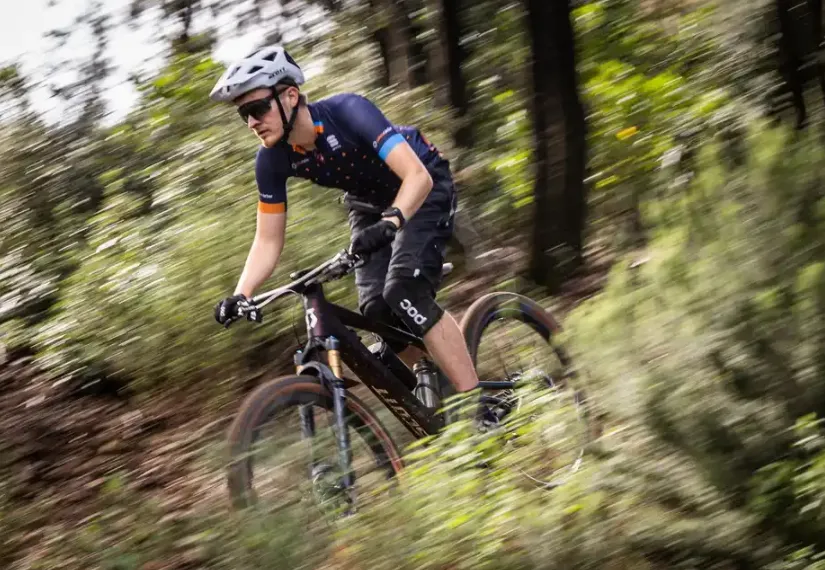
Why? Heavier riders put more force through the tires, so this needs to be balanced out with correspondingly high tire pressures. The reverse is for lighter riders.
Terrain
Likewise, where are you going to ride? If you're riding somewhere that's really rocky and rooty, maybe on fast terrain, so you might hit those features at speed, you might need to increase your air pressure.
Higher tire pressure means less tire deflection when you hit a rock, and therefore, less chance of a puncture. Although if the tire pressure is too high, you may increase the risk of tearing the tire carcass.
Conversely, if you're riding on smoother terrain, or at lower speeds (think steep mud and technical trails with lots of roots), the lower tire pressure will deflect the tire more, making it more Adapts well to the shape of the ground for improved grip.
As you've noticed, a dry track can ride very differently when it's wet, so your air pressure may have to change depending on track conditions.
Riding Style
Although less "measurable", the rider's style may also be taken into account.
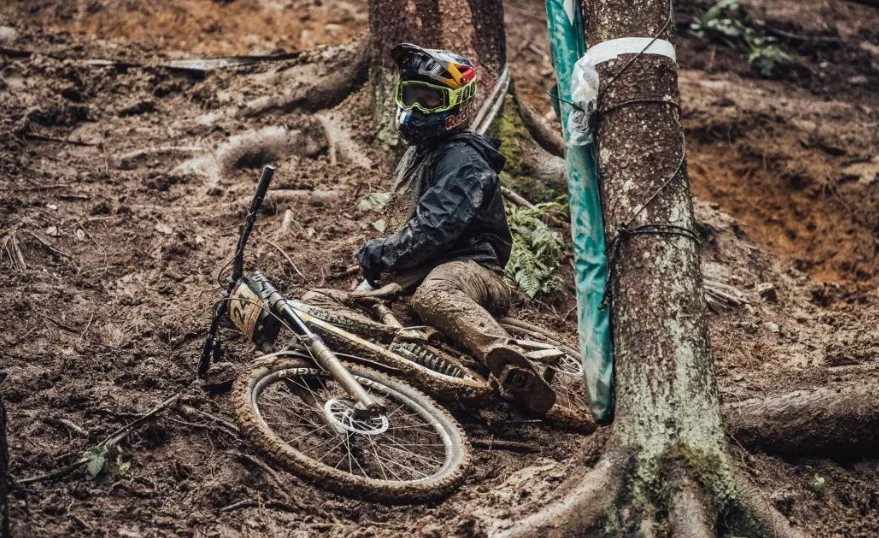
You might use a few pounds less if your ride was a bit more precise, smoothing through obstacles. However, if you're more of a jumper when you ride, you might want to pay a little more attention to puncture protection.
How does the structure of a tire affect tire pressure?
Now let's look at the tire itself. After all, even the best mountain bike tires come in a wide variety of widths, diameters, compounds, and carcass types, all of which affect the required air pressure.
Tire Width
First the obvious issue - the width of the tires. This also has to do with the overall shape and volume of the tire, which itself depends on the internal width of the mountain bike rim. Best 2023 Hardtail Mountain Bike Wheel The internal width of the mountain bike rim it is mounted on.
Wider tires have a greater volume of air inside. Likewise, a given tire, on a wider rim, will be wider inflated than the same tire on a narrower rim.
In general, higher-volume tires can handle lower air pressures before they feel imprecise and the tire moves excessively on the rim, or before they are more prone to punctures or tire bounce. Here, the bead of the tubeless tire is briefly pulled away from the rim, expelling the air.
Also, run high-volume tires at too high an air pressure, and you're more likely to feel the tires bouncing.
As a rule of thumb, high-volume tires can be run at slightly lower air pressure than low-volume tire settings.
Rim Width
Wider tires tend to perform better on correspondingly wider rims. A wide tire on a narrow rim will take on a bulbous shape when inflated, tending to roll side to side on the rim, resulting in a blurry road feel.
Narrow tires on wide rims can become too boxy, which changes the tire's lean feel in corners and can cause shoulder creep. There is also less lean angle when cornering.
So what do we mean when we talk about "narrow" rims and "wide" rims? What is the best match between tire width and rim width? Rim width?
Despite the difference, the narrower 2.2in tires are best mounted on rims with an internal width of about 25mm.
A 2.4in tire mounted on a 25mm to 30mm rim is a good place to start.
With tires 2.5 to 2.6 inches wide, we'd look for a 28 to 35mm rim.
Finally, 2.8in tires are probably best suited for rims above 35mm.
How do you know if your tire pressure is correct?
Finally, assuming you start fine-tuning your tire pressure right now, how do you know your tires are at the correct pressure?
Well, if you're on a steep, slow, technical track or a fast, high-load track, you can feel the front tire roll when you push, or start to feel the rim screech when you hit a rock or tree root If there's a thump and clank, then pay attention. If so, you should add more air to your tires for better stability and puncture protection.
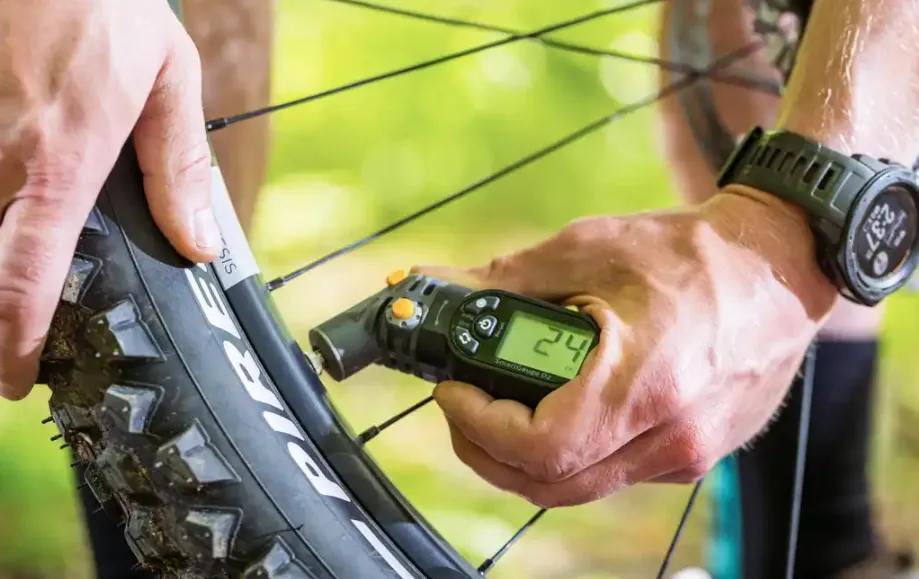
On the other hand, if your tires feel like they're bouncing or slipping uncontrollably when you're riding over rocks or tree roots (especially if they cross your path at an angle), you may have too much air pressure.
Likewise, if you're struggling on backcountry trails, maybe you need to lower the air pressure a bit.